
In an unexpected diplomatic breakthrough amidst a deeply fractured geopolitical landscape, world leaders at the United Nations General Assembly have approved a unanimous resolution addressing the existential threat of global sea level rise. The milestone agreement marks a sharp departure from recent trends in international climate policy, which have been severely strained by the policies of U.S. President Donald Trump’s second term.
Since taking office, the current U.S. administration has systematically dismantled key pillars of global climate cooperation. Washington has officially withdrawn the United States from the Paris climate agreement, aggressively opposed international frameworks designed to implement a carbon tax for cargo ships, and even threatened allied and developing nations with sweeping tariffs should they voice strong concerns about climate change on the world stage. Given this hostile climate posture, the peaceful passage of the UN sea level rise resolution caught international observers by surprise. Notably, the United States chose not to block the measure, allowing it to move forward by unanimous consensus.
The successful adoption of the accord represents a rare and significant victory for multilateralism, carrying extra weight because the official text explicitly references climate change and the pressing need for climate aid directed toward developing nations. For vulnerable low-lying regions, the declaration injects renewed energy into stalled international discussions.
Philip Davis, the prime minister of the Bahamas, emphasized the critical importance of the agreement in an interview, highlighting the severe geographic realities facing small island nations. Noting that his country’s landmass sits less than three meters above sea level, Davis pointed out that communities are already witnessing their ancestral land being swallowed by encroaching waters while global efforts to stem greenhouse gas emissions remain paralyzed. He expressed optimism that the newly minted UN declaration will serve as a catalyst to heighten the flow of concrete action and international support.
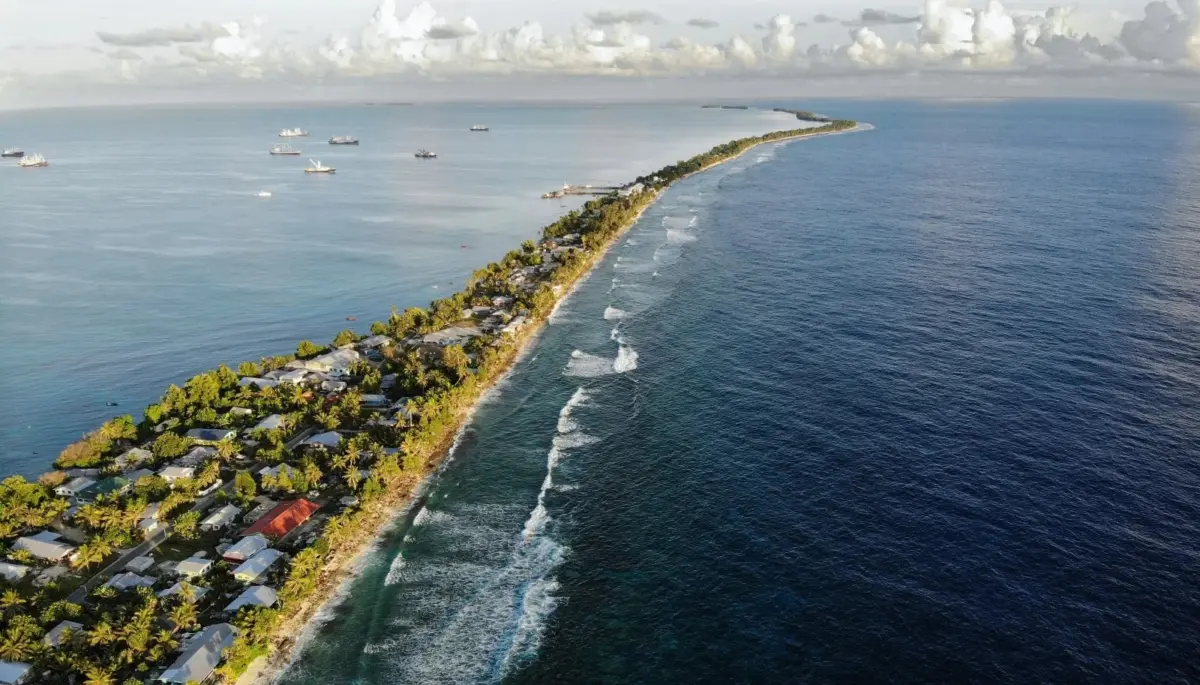
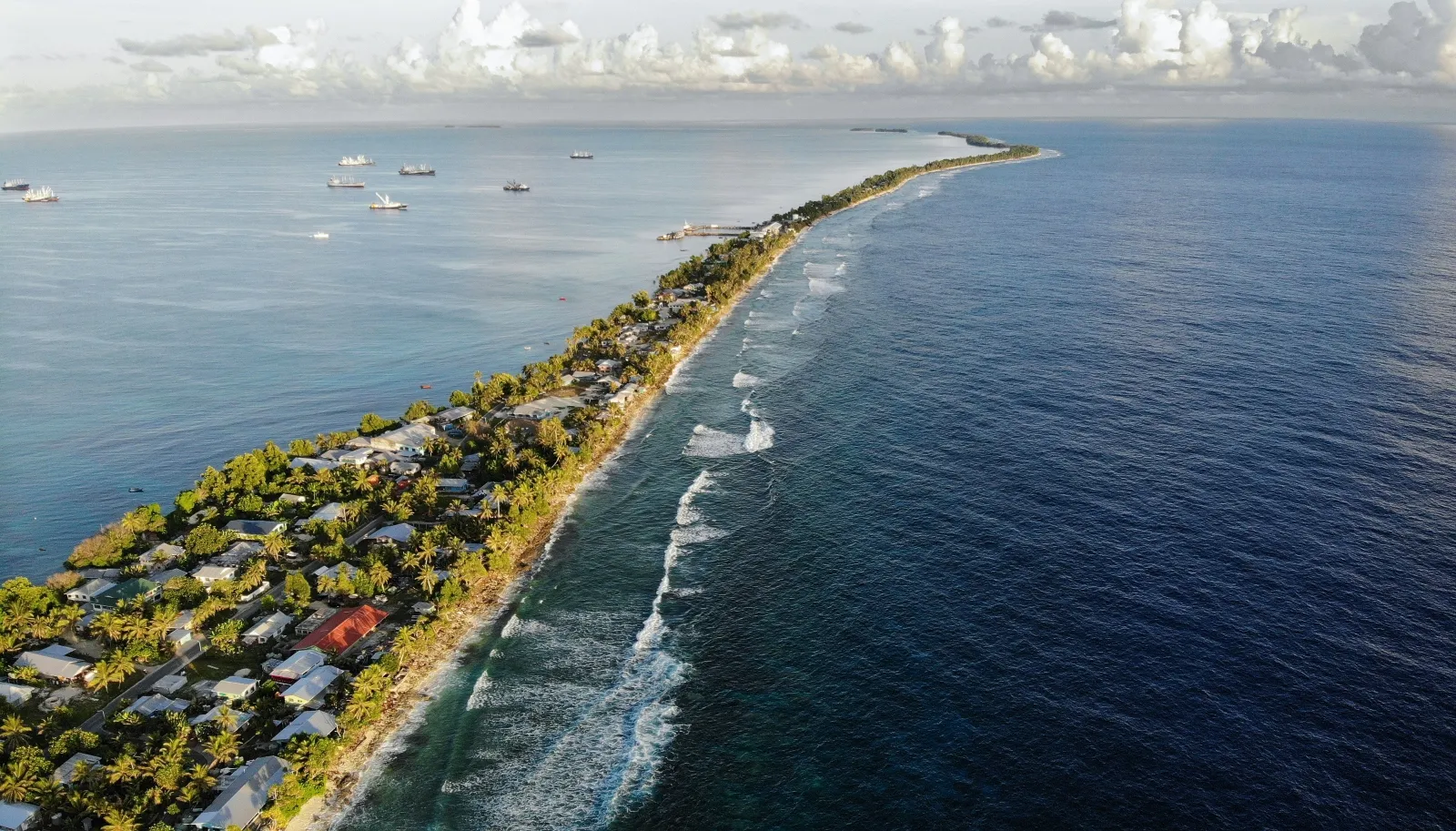
For many low-lying countries, the implications of this legal and political framework are nothing short of profound. Nations such as Tuvalu and the Marshall Islands face the terrifying prospect of total inundation over the coming century as rising global temperatures accelerate the melting of the world’s ice sheets and glaciers. Historically, international law offered little clarity regarding the fate of sovereign nations that lose their physical territory entirely to the sea. Under the terms of the new agreement, however, these vulnerable states will continue to exist as recognized political actors on the international stage even if their landmass completely disappears. Furthermore, they will retain perpetual control over their old maritime borders—the vital stretches of ocean extending from their coastlines over which a country exercises exclusive control for commercial fishing, energy development, and other critical economic and military activities.
The declaration is the culmination of a persistent, multi-year diplomatic campaign led by the Alliance of Small Island States, an influential negotiating bloc representing dozens of low-lying island nations. While recent rulings from prominent international legal bodies have steadily affirmed the continued rights of nations facing inundation from sea level rise, the world’s broader political leadership had never formally endorsed those legal opinions until now.
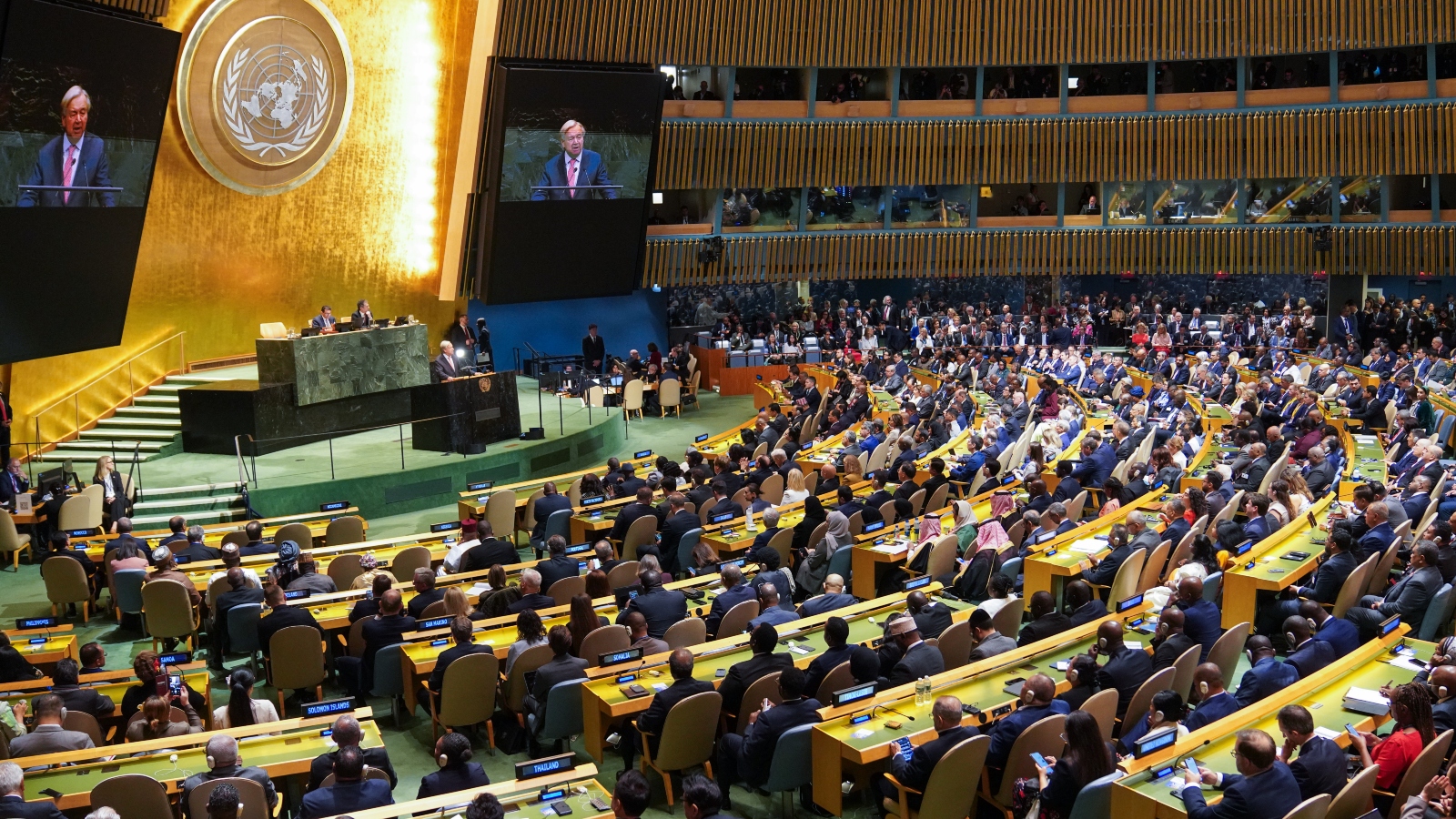
Kamal Amakrane, managing director of the Global Center for Climate Mobility and climate envoy for Trinidad and Tobago—a nation that played a vital role in initiating talks toward the global declaration—noted the historical weight of the moment. He observed that what was long treated as a legal presumption has now been transformed into an explicit international affirmation. Amakrane underscored the extraordinary nature of the achievement, pointing out that the global community managed to agree on measures to preserve small island states by consensus during a year when consensus has proven exceptionally difficult to secure.
The document enshrines robust protections for states at immediate risk of losing their physical territory. It formally establishes that countries can maintain their designated maritime zones in the face of physical changes resulting directly from sea level rise, adopting a principle that the document terms a "presumption in favor of continued statehood." This language directly echoes a landmark climate ruling issued last year by the International Court of Justice, which held that once a sovereign state is successfully established, the physical disappearance of one of its constituent elements—such as dry land—does not automatically entail the loss of its statehood. The court ruling also affirmed that existing international law strictly requires countries to respect one another’s established borders.
For economies dependent on pristine marine environments, these protections are vital. In the Bahamas, safeguarding ocean territory is an absolute economic necessity tied directly to a thriving tourism industry. Prime Minister Davis stressed that the newly affirmed legal protections will successfully safeguard his country and its neighbors against aggressive attempts by commercial entities to claim valuable ocean territory for emerging and destructive industries, such as deep-seabed mining. Asserting that the world’s oceans cannot become a free-for-all governed by the philosophy that might makes right, Davis emphasized that the rules-based international order must protect the vulnerable.
Beyond territorial and maritime rights, the agreement also features strong language acknowledging that developed countries and historic high-emitters carry an urgent obligation to provide expanded access to adaptation funds for small island states. This crucial financial support can be utilized to construct resilient seawalls, restore protective mangrove forests to shield fragile coastlines from storm surges and rising tides, or fund complex, orderly population relocations away from severely flood-prone coastal areas.
Despite the positive momentum generated by the text, the declaration on its own lacks the enforcement mechanisms necessary to immediately increase the pool of capital available to states like the Marshall Islands. Wealthy industrialized nations currently provide developing nations with approximately $130 billion a year in combined grants and low-concessionality loans earmarked for clean energy transition and climate adaptation. Experts and vulnerable nations alike agree that this figure falls well short of the trillions necessary to avoid catastrophic local impacts.
While the international community agreed in late 2024 to target an increase to $300 billion in annual climate finance by 2035, it remains far too early to accurately gauge meaningful progress toward that ambitious target. Even under the current financial arrangements, a significant portion of international climate aid is distributed in the form of loans rather than grants. These debt instruments are exceptionally difficult for island states to absorb and service, particularly nations like the Bahamas, which are already burdened by billions of dollars in national debt stemming largely from the staggering recovery costs and infrastructural damages left in the wake of catastrophic storms like 2019’s Hurricane Dorian.
Even so, the explicit inclusion of adaptation financing language within the UN text was warmly welcomed by island nations. Language concerning climate aid and financial obligations has been heavily contested and routinely watered down at recent United Nations climate summits, with wealthy nations frequently pushing back against calls for the trillions of dollars needed to build flood barriers and elevate sinking islands. U.S. President Donald Trump has taken an even more hardline approach, rejecting nearly all international aid obligations, severely dismantling the U.S. Agency for International Development, and pulling the United States out of dozens of foundational international treaties.
Yet, remarkably, neither the U.S. State Department nor other finance-averse governments moved to block or reject the adaptation language embedded within the sea level rise declaration. The State Department did not respond to multiple requests for comment prior to publication.
According to legal experts, the primary driver behind Washington’s unexpected acquiescence is that robust legal protections against the consequences of sea level rise ultimately serve the national interest of every country, regardless of its political stance on climate change. Bryce Rudyk, a law professor at New York University who serves as a legal advisor to the Alliance of Small Island States, explained that the United States and other wealthy nations are not entirely immune to geographic changes driven by rising seas. In various coastal nations, shifting or disappearing maritime borders could ultimately jeopardize sovereign control over lucrative natural resources, including offshore oil reserves, valuable mineral deposits, and rapidly expanding offshore wind energy installations.
Everyone will eventually lose some coastal land, Rudyk noted, and no major nation wants to risk losing its sovereign ocean territory and resource rights. That shared self-interest is precisely why powerful nations were ultimately comfortable signing off on relatively strong legal statements, recognizing that it is in every country’s interest to establish the precedent that recognized sovereign states must not simply be allowed to disappear from the map.