
Archival Roberto Cavalli is currently enjoying a profound cultural renaissance. The brand’s aesthetic—once synonymous with the excess of the 1970s and the provocative edge of the early 2000s—is seeing a surge in demand that extends far beyond the high-fashion runways. Earlier this month, a rare, curated stash of the designer’s 1970s printed leathers was exhibited and sold at Reracked, a boutique in upstate New York, drawing crowds of vintage enthusiasts and collectors alike. Simultaneously, the resale market has become a hunting ground for those seeking pieces from the designer’s younger, punkier Just Cavalli line from the early 2000s. The scarcity of these garments, combined with their distinctive prints and rebellious silhouettes, has cemented their status as highly coveted items in a landscape increasingly defined by archival appreciation.
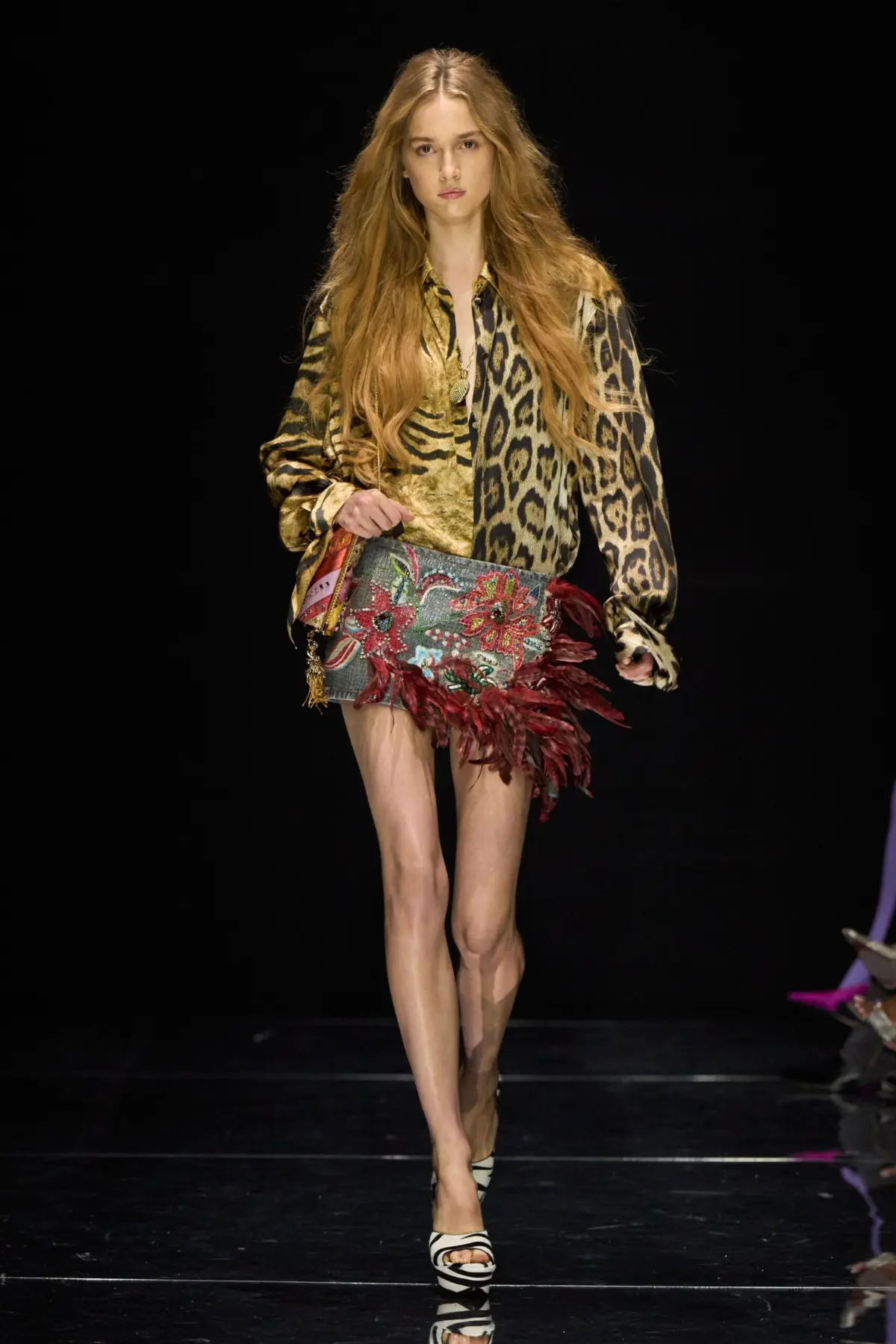
Fausto Puglisi, the brand’s current creative director, has spent the last five years carefully calibrating his vision for the house. While his tenure has been marked by occasional departures from the label’s traditional "glamazon" identity, his latest collection represents a definitive embrace of the brand’s DNA, filtered through a contemporary, club-ready lens. By injecting Cavalli’s signature animal prints, intricate velvet devorés, and elaborate embroideries with a newfound, gritty, and decidedly "clubby" energy, Puglisi has created a collection that speaks directly to the sensibilities of a new generation of fashion devotees. It is, by all accounts, a collection designed for the girlies—those who prioritize bold expression and high-octane glamour over the minimalist constraints that have dominated the industry for the past several seasons.
The focus of the collection was firmly placed on separates, a strategic choice that highlights versatility and individual expression. The runway was a whirlwind of miniskirts, bike shorts, halter tops, and hot pants, all executed with the brand’s characteristic flair for the dramatic. There were lace-edged camisoles and embellished low-rider jeans that featured the deliberate, provocative detail of strappy thongs peeking out above the waistbands—a nod to the Y2K aesthetic that has been steadily reclaiming its place in modern closets. This kaleidoscope of patterns and textures served as a sharp, necessary contrast to the monochromatic palette of black, white, and beige that defined much of the recent fashion week schedule.
Backstage, Puglisi reflected on the cultural climate that birthed such a vibrant collection. "I’m thinking about the time we’re living in," he remarked, suggesting that his pivot toward high-energy, nightlife-ready attire is a direct response to a collective desire for release and celebration. His instincts appear to be perfectly aligned with the current mood of the industry. After several years characterized by the constraints of "quiet luxury" and a pragmatic, almost austere approach to dressing, there is a palpable shift occurring. High heels have made a triumphant return to the front rows, and the atmosphere in Milan has shifted accordingly. As an astute observer noted during an industry dinner held at Bice, the perennial hotspot that served as a hub for the fashion week crowd, "Milan is partying again."
The references informing Puglisi’s work are as eclectic and layered as the garments themselves. His process is one of synthesis, pulling from a vast archive of cultural touchstones to create something that feels both referential and entirely fresh. Courtney Love’s signature grunge splendor was a visible influence, lending a raw, unpolished edge to the more refined elements of the collection. The nostalgic aesthetic of Beverly Hills 90210 provided a baseline for the youth-driven, experimental silhouettes, while the presence of modern style icons like Zendaya served as a barometer for what resonates in today’s media-saturated environment.
However, Puglisi’s inspirations extend beyond the sphere of pop culture. He draws deeply from the fine arts, citing the masterpiece of Antonello da Messina—recently recovered after being stolen from a Sicilian museum—as a point of intellectual focus. Furthermore, he pointed to Todd Gray’s Octavia’s Gaze, an exhibition at LACMA, as a significant influence. Puglisi spoke of his appreciation for how the work managed to "put different worlds dialoguing together," a philosophy he clearly applies to his own design process at Cavalli. By blending the high-brow history of Italian art with the low-brow, high-octane energy of the grunge and club scenes, he creates a dialogue that is inherently Cavalli.
Despite the depth of these references, they remain firmly in the realm of subtext. The clothes themselves possess an immediacy that requires no explanation. They are designed for the act of living—for nights out, for dancing, and for reclaiming the public sphere as a space for personal expression. This ability to create garments that are simultaneously complex in their construction and uncomplicated in their purpose is where Puglisi excels. He has tapped into a vein of nostalgia that feels vital rather than derivative, ensuring that while the house of Roberto Cavalli honors its storied past, it is firmly positioned within the pulse of the present.
The success of this collection is not merely in its aesthetic appeal but in its timing. Fashion, at its best, acts as a mirror to the societal mood. If the last few years were defined by a retreat into the safe and the sensible, the current season suggests a move toward the expressive and the excessive. By leaning into the archive and embracing the "clubby" edge of the brand’s history, Puglisi has positioned Cavalli at the vanguard of this shift. The enthusiasm from both the press and the buyers present in Milan suggests that the appetite for such unapologetic glamour is not only returning but is being met with a renewed sense of urgency.
As the industry continues to navigate the complexities of the post-pandemic era, the role of designers like Puglisi becomes increasingly important. He provides a framework for joy and hedonism that feels authentic to the brand’s heritage. The resurgence of archival Cavalli, bolstered by the success of the current collection, highlights a broader trend: a move away from the ephemeral nature of micro-trends and toward the enduring power of house codes that feel both personal and provocative. Whether through the lens of a vintage hunt in upstate New York or the high-gloss production of a Milanese runway, the message is clear—the spirit of the party is back, and it is wearing leopard print.
The runway show concluded with a final parade of silhouettes that underscored the collection’s core mission: to celebrate the body, to embrace the night, and to defy the beige monotony that had settled over the season. In a city known for its history, its craftsmanship, and its ability to reinvent itself, Puglisi’s latest offering serves as a reminder that fashion is not merely about clothing; it is about the stories we tell and the experiences we choose to amplify. By focusing on the "girlies" and the "clubby edge" that has always been the heartbeat of the label, Puglisi has ensured that the legacy of Roberto Cavalli is not just preserved in museums or vintage stores, but is alive, moving, and thriving in the streets of Milan.