
The promise of automated surveillance technology has long been a subject of intense debate among law enforcement agencies, civil liberties advocates, and the public. Proponents of automated license plate readers (ALPRs)—such as systems manufactured by companies like Flock Safety and Axon—often argue that round-the-clock monitoring is an essential tool for tracking dangerous criminals and solving violent crimes. However, a growing body of real-world cases demonstrates that these systems are far from infallible. When automated surveillance is paired with rushed police work and a failure to verify basic physical evidence, the consequences for innocent citizens can be catastrophic.
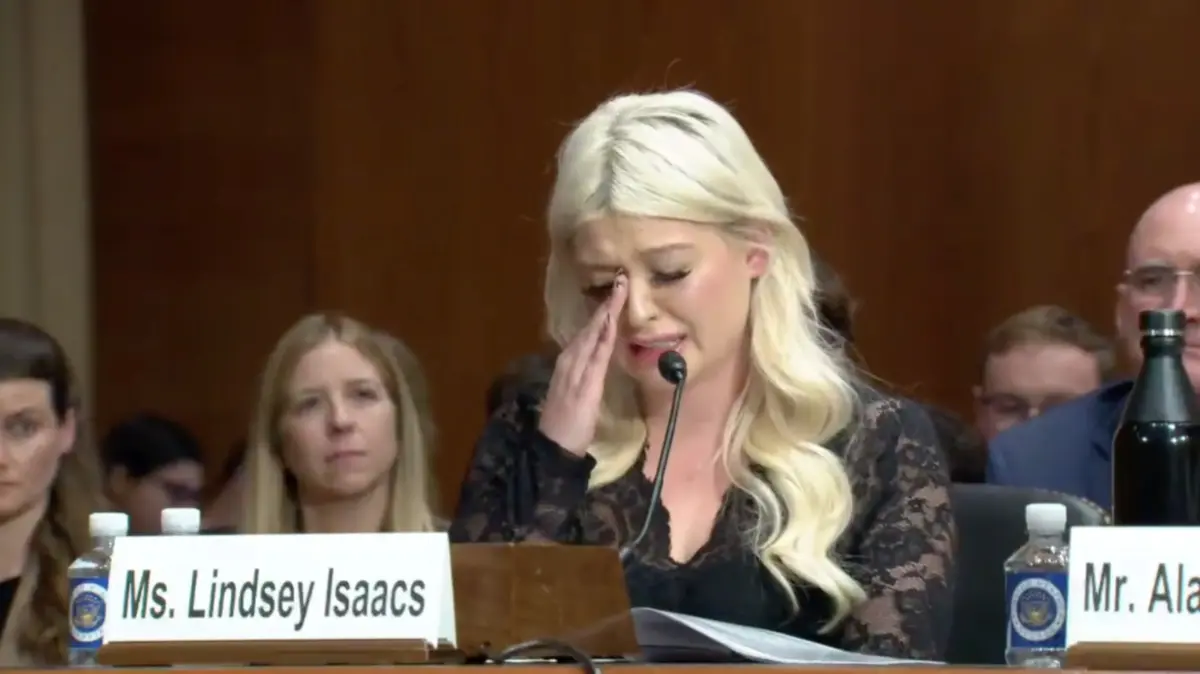
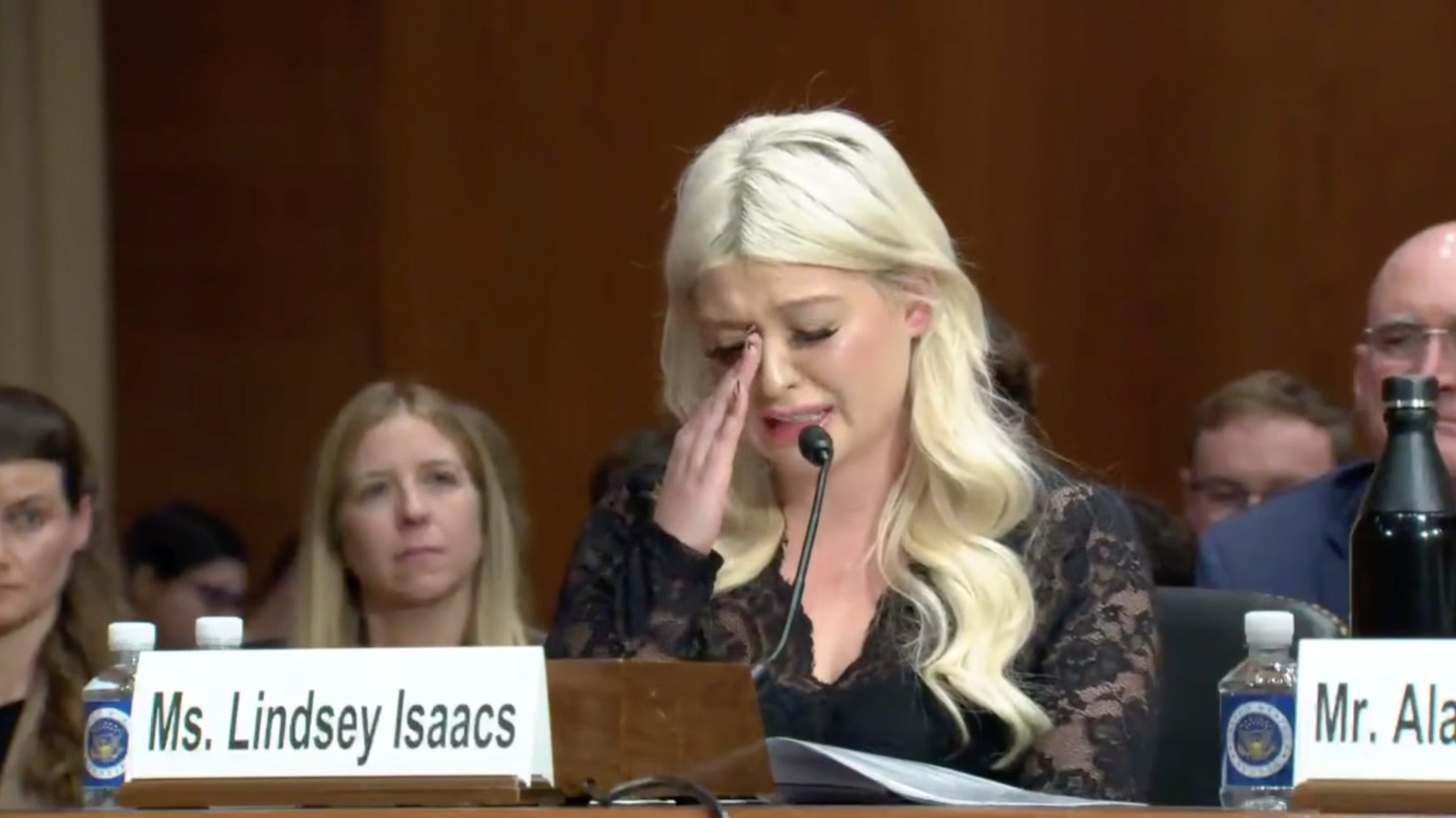
This harsh reality was recently brought to light before the United States Senate, where a 23-year-old woman shared the harrowing story of how a software-driven mistake by law enforcement upended her life. Lindsey Isaacs testified before the Senate Judiciary Subcommittee on Crime and Counterterrorism, recounting how the Florida Highway Patrol mistakenly linked her vehicle to a fatal collision, resulting in her arrest on eight felony charges, nearly four days in solitary confinement, and a total of 13 days behind bars for a crime she had nothing to do with.
The chain of events that led to Isaacs’ detention began on October 4, 2025, following a devastating crash on Interstate 4 in Volusia County, Florida, which tragically claimed the lives of three people. According to local reporting from outlets such as WFTV and CBS12, crash investigators immediately launched a statewide search for a Dodge Durango believed to have been connected to the collision.
During their sweep of the area, a Flock Safety automated license-plate recognition camera recorded Isaacs’ black Dodge Durango traveling approximately two to three miles away from the actual crash scene. According to Isaacs’ congressional testimony and subsequent investigative reports, that single camera record quickly became the anchor of the police investigation, ultimately paving the way for her arrest.
However, legal experts and civil rights advocates point out a fundamental misunderstanding of how ALPR technology operates. Automated license plate readers generate investigative leads by capturing vehicle characteristics, license plate numbers, and location data. They are explicitly designed to flag where a vehicle was at a specific moment in time; they do not identify who was behind the wheel, nor do they establish that a specific vehicle caused an accident or committed a crime. Flock Safety has publicly reiterated this limitation on multiple occasions, emphasizing to news organizations like Atlanta News First that its camera systems provide investigative leads rather than definitive proof of identity or guilt.
Despite these recognized limitations, investigators operating in Volusia County allegedly seized upon the camera hit, concluding that Isaacs’ Durango must have been the vehicle involved in the fatal incident. Armed with this assumption, authorities pursued an arrest without uncovering any physical evidence to tie Isaacs to the crash.
Ignore all other evidence
The investigation reportedly brushed aside glaring contradictions that should have immediately cast doubt on Isaacs’ involvement. According to accounts of the case, eyewitnesses to the collision had described a vehicle matching the general model of a Durango, but specified a different color than Isaacs’ car. Furthermore, a physical inspection of Isaacs’ SUV would have revealed a glaring inconsistency: her vehicle bore no signs of the extensive damage typically associated with a high-speed, fatal hit-and-run collision.
Aside from these major discrepancies, the case against Isaacs relied heavily on the automated camera ping. Once arrested, Isaacs’ nightmare deepened inside the detention facility. Testifying before the Senate committee, she described being immediately thrown into solitary confinement, where she was held for 86 hours—equivalent to three and a half days. Law enforcement and correctional officials reportedly justified the extreme isolation by citing the severity of the felony charges against her and the need for a pending administrative evaluation.
While authorities eventually moved her out of solitary confinement, her ordeal was far from over. According to reporting by The Center Square and details from her testimony, Isaacs was transferred to a mental-health unit for approximately 24 hours before being moved again into maximum-security housing. She remained confined in the maximum-security unit for the remainder of her 13-day detention.
During her testimony, Isaacs shared the profound psychological toll the experience took on her, stating that at her lowest point inside the facility, the stress and hopelessness were so overwhelming that she did not want to live. This detail, brought forward directly through her sworn congressional testimony, underscores the severe human cost associated with wrongful incarceration.
Ultimately, prosecutors dropped all charges against Isaacs as the state’s case unraveled. A subsequent, more thorough investigation identified another individual—Alisa Montalvo—as the suspected driver actually connected to the fatal collision, according to coverage by Fox 35.
In the wake of her release and the exoneration of her name, Isaacs has taken legal action, filing a civil lawsuit against the Florida Highway Patrol troopers involved in the case as well as the agency itself. The claims and allegations contained within the lawsuit remain unresolved and have not yet been adjudicated by a court of law.