
After two decades at the helm of his eponymous label, Greta Constantine designer Kirk Pickersgill has mastered the delicate art of balancing artistic evolution with the pragmatic demands of his clientele. As the brand marks its 20th anniversary, the latest Spring 2027 Ready-to-Wear collection serves as a testament to this longevity. Rather than pursuing fleeting trends that might alienate his established following, Pickersgill took a more intimate approach: he listened. The collection is a direct reflection of the feedback, desires, and lifestyle requirements gathered from his glamorous, fashion-forward base—the women who have defined the Greta Constantine aesthetic for the last twenty years.
For Pickersgill, the design process for this season was deeply rooted in conversation. By engaging directly with the women who frequent his atelier and attend his shows, he sought to create a collection that felt both aspirational and deeply personal. “There are so many different women wearing our clothes,” Pickersgill remarked, reflecting on the diversity of his audience. “I wanted to focus on fabrications and colors that will make sure she’s always remembered.” This focus on memorability—the idea that a garment should not only flatter but also serve as a centerpiece for a high-profile evening—is the backbone of the Greta Constantine brand identity.
In an industry where Canadian labels often struggle to maintain a global footprint while weathering the volatility of the retail landscape, Greta Constantine remains a rare, enduring success story. Pickersgill’s ability to appease both his private clients and his wholesale retailers is a strategic triumph. He manages this by doubling down on his signature elegant approach to evening wear, ensuring that the core silhouettes his brand is famous for remain recognizable, while simultaneously introducing technical innovations that keep the design language fresh and exciting.
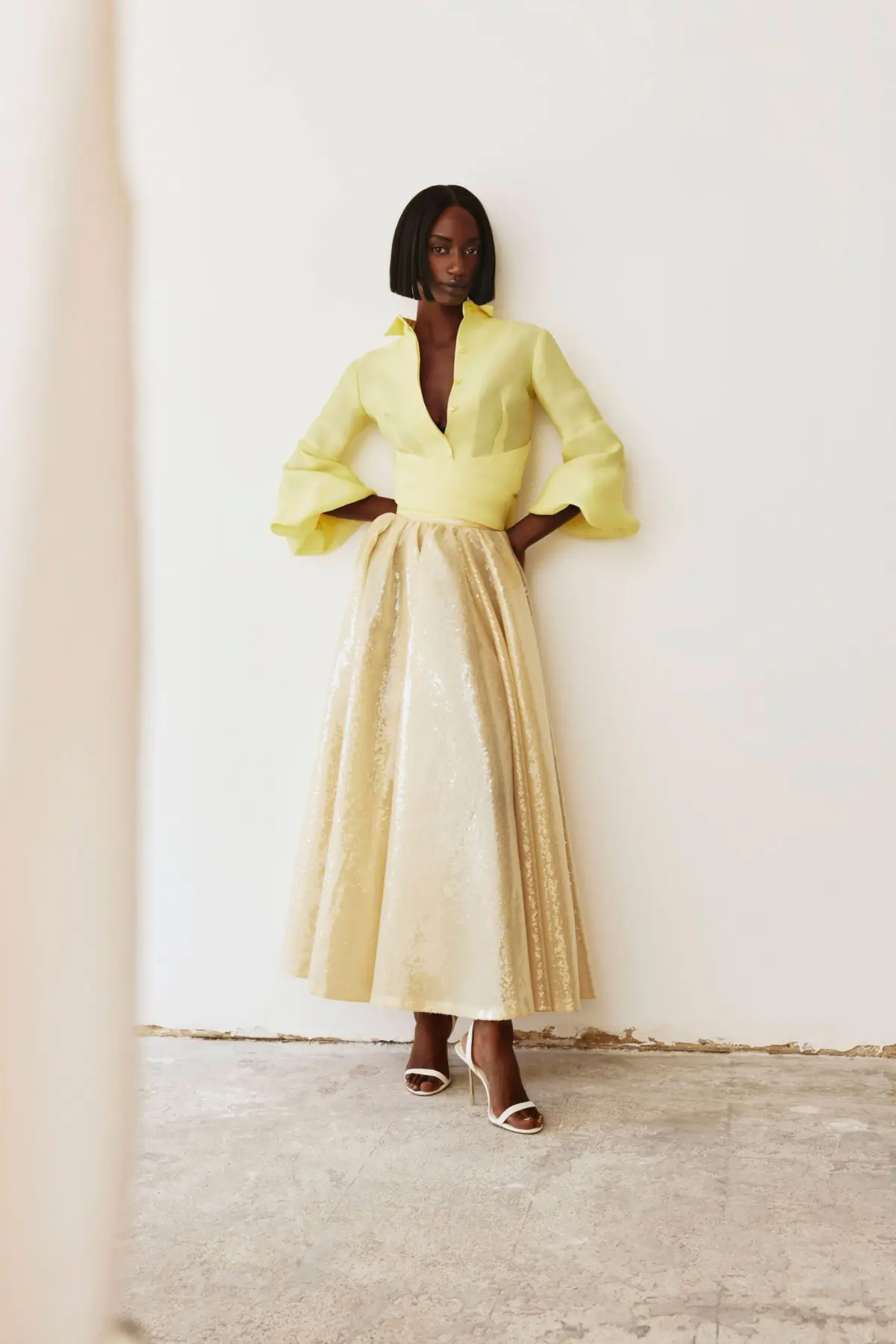
The runway show opened with a clear statement of intent: a stunning butter-yellow sequined ball skirt that immediately signaled a move toward sophisticated craftsmanship. The garment featured eight individual panels of organza spliced together, a construction choice that achieved a heavy, sculptural pleating effect. When paired with a matching silk-gazer top, the ensemble exuded a formal grandeur that felt distinctly modern, avoiding the traps of traditional "princess" aesthetics in favor of a cleaner, more architectural silhouette. This opening look set the tone for a collection that prioritized weight, texture, and movement.
As the show progressed, it became evident that Pickersgill was also keeping a watchful eye on the next generation of his clientele. One particularly striking two-piece set featured a vibrant, floral-print top paired with a tiered miniskirt, both constructed from engineered sequins. This ensemble served as a clear nod to his younger, more trend-conscious customers who desire the signature Greta Constantine sparkle but seek a silhouette that feels more youthful and versatile. By bridging the gap between the classic floor-length gown and more contemporary separates, Pickersgill demonstrated a keen awareness of how his demographic is shifting and diversifying.
However, the heartbeat of the collection remained, as always, the dresses. Pickersgill’s proficiency with color and texture was on full display, most notably in a strapless curved-bodice pink gown. The dress was crafted from fringed strips of microfiber, a choice of material that added a dynamic, tactile quality to the garment. As the model walked, the fringe moved with her, creating a kinetic visual effect that elevated the dress from a static piece of clothing to a living, breathing component of the wearer’s presence. It was a sophisticated display of how material science can be applied to luxury evening wear to create something truly distinctive.
Innovation also took a more functional turn with a long-sleeved red chiffon dress, which emerged as a highlight of the collection’s focus on versatility. The dress featured a unique, clever front panel that offered the wearer several styling options: it could be knotted for a structured, cinched look, tied through a waist loop for a draped effect, or left free and flowy for a more relaxed, bohemian silhouette. For Pickersgill, this was not merely a design quirk but a direct response to the modern woman’s need for efficiency and adaptability.
His clients may prize the prim and proper, but they have little patience for fussiness. In the fast-paced world of gala appearances and high-stakes social events, they require pieces that can transition seamlessly from one environment to another. Even the most ritzy of his customers, who might have their pick of international couture houses, are increasingly seeking out items that offer utility without compromising on glamour. “Our women want more than one way to wear a gown,” Pickersgill noted, emphasizing the value of multi-functional design. “If you can offer them several ways to wear it, they’re obsessed.”
This sentiment underscores the fundamental philosophy that has sustained Greta Constantine for two decades: luxury is best served when it respects the wearer’s time and lifestyle. By focusing on these "three-in-one" designs and engineered fabrics, Pickersgill has managed to retain the theatricality that makes his shows a highlight of the season while simultaneously providing his retailers with pieces that feel essential rather than indulgent. It is this balance of the spectacular and the practical that has kept the brand relevant in an era where many evening-wear labels have faltered.
The collection as a whole acted as a retrospective of sorts, celebrating the core silhouettes that made the brand a household name while signaling that Pickersgill is not finished innovating. From the heavy, sculptural organza skirts to the lightweight, versatile chiffon dresses, the range of textures suggested a designer who is intimately familiar with the properties of his materials. He understands how a gown should hang, how it should move under stage lights, and how it should make the woman wearing it feel the moment she enters a room.
As the fashion industry continues to navigate the complexities of sustainability and the demand for more meaningful consumption, Pickersgill’s strategy of listening to his customers appears increasingly prescient. By creating garments that offer multiple styling options, he is inadvertently championing a form of longevity—a dress that can be worn three different ways is a dress that is less likely to be discarded after a single outing. It is a subtle, sophisticated way of addressing the evolving ethics of the modern wardrobe.
Looking forward, the Greta Constantine label appears well-positioned to carry its momentum into the next decade. By staying tethered to the feedback of his clients while refusing to sacrifice his own creative instincts, Pickersgill has built a loyal, multi-generational community of wearers. The Spring 2027 collection is not just a seasonal offering; it is a declaration that after twenty years, the brand is still learning, still listening, and still defining the standard for Canadian evening wear. As the lights dimmed on the final look, it was clear that the designer’s commitment to his "glamorous women about town" remains the most vital asset in his creative arsenal. The collection serves as a vibrant reminder that in the world of high fashion, the most successful designs are often those that treat the wearer not just as a muse, but as an active partner in the creative process.