
Whether navigating treacherous winter snowstorms or driving across rain-slicked roadways during a torrential downpour, few automotive features inspire as much behind-the-wheel confidence as all-wheel drive (AWD). While sport utility vehicles and crossovers immediately spring to mind when shoppers think of four-wheel traction, the reality is that many drivers prefer the driving dynamics, traditional styling, and everyday manageability of a sedan. Furthermore, all-wheel-drive sedans frequently command a lower purchase price and deliver superior fuel economy compared to their high-riding utility counterparts.
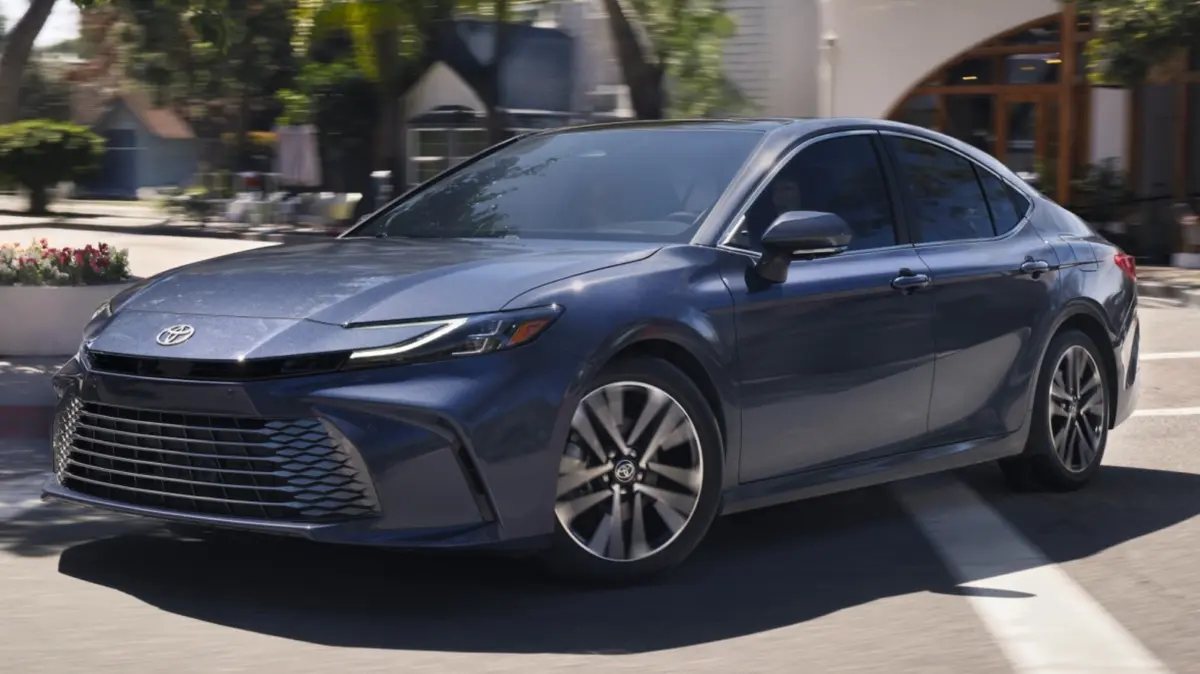
For buyers shopping in this segment, the Toyota Camry often serves as the default benchmark. Holding the title of America’s best-selling sedan in 2025 and topping the hybrid sales charts for the first half of 2026, the Camry is a dominant force on the market. However, popularity can have its drawbacks. Some motorists prefer not to follow the crowd, and high demand means local dealers may be less willing to negotiate steep discounts on a Camry.
Buyers working with a Camry-sized budget who require the four-wheel-grip of all-wheel drive have several alternative pathways to explore, spanning both the new and pre-owned markets. To establish a pricing baseline, the least expensive 2026 Toyota Camry equipped with all-wheel drive carries a manufacturer’s suggested retail price of $32,285, which includes a mandatory $1,295 destination fee. While that approximate $32,000 figure serves as a reliable guideline, market fluctuations and specific vehicle configurations mean actual transaction prices can vary by a few thousand dollars in either direction.
Reviewing mainstream new options alongside slightly used luxury alternatives reveals a diverse marketplace for sedan buyers who want all-weather capability without buying an SUV. Focusing purely on purchase price and four-wheel traction allows shoppers to evaluate several compelling models from both mainstream and premium brands.
Hyundai Sonata
With domestic non-luxury automotive brands largely absent from the modern sedan landscape, shoppers seeking mainstream all-wheel-drive options must look primarily to Asian manufacturers. The Hyundai Sonata stands out as an obvious choice and a direct competitor to the Toyota Camry. When configured to send power to all four corners, the mid-grade SEL Sport trim serves as the lowest entry point into the Sonata’s all-wheel-drive lineup.
Priced at $32,445, including a $1,295 destination charge, the AWD Sonata commands a modest $160 premium over the base AWD Camry. While Hyundai does offer a hybrid powertrain for the Sonata, that specific configuration is restricted strictly to front-wheel drive. Selecting the all-wheel-drive Sonata means getting a naturally aspirated 2.5-liter four-cylinder engine that generates 191 horsepower, managed by an eight-speed automatic transmission.
While the Camry claims the highest overall score in Consumer Reports’ 2026 sedan ratings, the Sonata maintains a strong position, ranking comfortably above average. Hyundai also distinguishes itself in the ownership experience by offering a five-year or 60,000-mile bumper-to-bumper warranty alongside a 10-year or 100,000-mile powertrain warranty, significantly eclipsing Toyota’s three-year/36,000-mile basic and five-year/60,000-mile powertrain coverage. Hyundai officially integrated all-wheel drive into the Sonata lineup as part of a comprehensive mid-cycle refresh for the 2024 model year, whereas all-wheel drive has been a fixture of the modern Camry’s option list since 2020, tracing its historical roots back to the Camry AllTrac models sold between 1988 and 1991.
Kia K5
For buyers who find that the Sonata does not quite meet their needs, the Kia K5 shares a significant amount of its underlying mechanical architecture with its corporate cousin from Hyundai and serves as another viable option. In Consumer Reports’ vehicle evaluations, the Kia K5 ranks at the lower end of the mainstream sedan segment, though it still maintains a respectable "good" overall rating.
Kia structures its lineup differently than Hyundai, restricting all-wheel drive exclusively to the mid-grade GT-Line trim level. This means budget-conscious shoppers cannot pair all-wheel drive with the lower-tier LXS trim, nor can driving enthusiasts combine all-wheel drive with the high-performance GT model, which features a potent turbocharged 2.5-liter four-cylinder engine pumping out 290 horsepower exclusively through the front wheels. Instead, the AWD K5 GT-Line utilizes the same mechanical hardware as the base Sonata, relying on a naturally aspirated 2.5-liter engine producing 191 horsepower paired with an eight-speed automatic transmission.
Because all-wheel drive is integrated into a mid-tier trim, the K5’s sticker price remains quite competitive at $31,335, including a $1,245 destination fee. This positions the all-wheel-drive Kia roughly one thousand dollars below the entry-level AWD Camry. Furthermore, the K5 GT-Line comes generously equipped with features such as leatherette upholstery and heated front seats, amenities that would require a substantial financial step up in a Toyota showroom.
Mazda Mazda3 Sedan
Shoppers who prioritize all-wheel-drive grip and a traditional four-door sedan body style, but are less concerned with maximizing interior passenger space, can add the Mazda3 Sedan to their consideration list. Much like Kia, Mazda requires customers to step away from base models to access a drivetrain that spins all four wheels.
For the Mazda3, the Carbon Edition trim serves as the entry point for all-wheel drive. This specification arrives reasonably well-appointed, featuring leather upholstery, a power sunroof, and a wide array of standard convenience features that outpace entry-level competitors. All of this brings a total MSRP of $31,130, including a $1,315 destination charge. While this pricing sits close to the Kia K5, the Mazda3 offers a robust list of standard equipment for the investment.
Under the hood, the Mazda3 Sedan features a naturally aspirated 2.5-liter four-cylinder engine that puts out 186 horsepower, routed through a six-speed automatic transmission. While Mazda does manufacture a turbocharged variant of this same engine capable of producing up to 250 horsepower, selecting that powerplant requires moving up to an even higher trim level. In performance testing, a zero-to-60 mph sprint takes approximately 7.5 seconds, placing the Mazda3 slightly behind the Camry, which accomplishes the same benchmark in 6.8 seconds courtesy of its 232 combined horsepower. Nonetheless, balanced driving dynamics and ample everyday power make the Mazda3 a celebrated choice for motorists of all experience levels. Among purely non-hybrid vehicles, the Mazda3 secured the highest overall score and a strong "good" rating in Consumer Reports’ comprehensive vehicle assessments.
Nissan Altima
Historically, the Nissan Altima beat its major Japanese rivals to the punch by introducing all-wheel drive to the midsize sedan market for the 2019 model year, predating the Camry’s AWD rollout by a full calendar year. This all-weather capability persists through the twilight of the vehicle’s lifecycle, as the 2026 model year marks the final run for the Nissan Altima before the nameplate is retired.
During its farewell model year, the Altima is offered in two primary trim levels, both of which can be specified with all-wheel drive. The base SV trim, when equipped with all-wheel drive, carries an MSRP of $31,570, which includes a $1,245 destination charge—undercutting an equivalent Camry by approximately $600. Consumer Reports has awarded the Altima an official "Recommended" designation alongside an above-average overall evaluation score.
Propulsion for the Altima comes from a traditional non-turbocharged 2.5-liter four-cylinder engine, mirroring the powertrain philosophy of the other new factory alternatives in this class. However, when Nissan’s engine is paired with its all-wheel-drive hardware and a continuously variable transmission, it generates 182 horsepower, making it the least powerful option among the newly manufactured contenders. In terms of efficiency, the Altima achieves an EPA-estimated combined fuel economy rating of 28 mpg, narrowly edging out the Sonata and K5, which both sit at 27 mpg. Meanwhile, the smaller Mazda3 Sedan achieves 29 mpg, and the hybrid-only Camry leads the efficiency conversation with an EPA rating of 50 mpg.
2022 Audi S4
Many automotive shoppers eventually bypass brand-new inventory entirely to look at pre-owned vehicles, seeking superior interior appointments, elevated refinement, or higher performance levels for a similar financial outlay. Even though a brand-new Camry earns stellar ratings, it remains a mainstream family car, and some buyers on a strict $32,000-to-$35,000 budget desire a more premium driving experience.
Stepping into the used market opens the door to vehicles like the 2022 Audi S4. Opting for a four-year-old luxury performance sedan offers a dual financial advantage: heavy initial depreciation has already been absorbed by the original owner, and Audi’s decision to sunset the A4 model family—upon which the S4 is fundamentally based—after the 2025 model year influences secondary market pricing, as discontinued nameplates frequently shed value faster than vehicles currently in active production. While Consumer Reports has not published a complete reliability score for the S4 specifically, it rated the closely related 2025 A4 as a recommended vehicle.
A nationwide search for clean-history examples—meaning vehicles completely free of reported accidents or title complications—with average or slightly below-average mileage, roughly 54,000 miles accumulated across four years of driving, yields numerous options priced right around the $35,000 threshold. Buyers willing to increase their budget by a thousand or two can easily secure examples with lower odometer readings or a slightly newer model year. In return, the driver receives an executive all-wheel-drive sedan propelled by a turbocharged 3.0-liter V6 engine that churns out a formidable 349 horsepower. This robust powertrain propels the S4 from a standstill to 60 mph in a blistering 4.2 seconds, easily outrunning mainstream family sedans.
2023 Acura TLX
While Honda’s mainstream Accord sedan remains strictly front-wheel drive, its upscale luxury division, Acura, offers compelling all-wheel-drive alternatives in the secondary market. Acura discontinued the TLX sedan following the 2025 model year, but the vehicle maintains a healthy presence on used car lots.
The 2023 model year represents an ideal "sweet spot" for shoppers, striking a balance between modern technology and post-peak depreciation. While high-performance V6-powered Type S variants command prices exceeding $40,000 for a 2023 model, buyers can comfortably target models equipped with the base turbocharged 2.0-liter four-cylinder engine. This powerplant delivers a healthy 272 horsepower to all four wheels through Acura’s Super Handling All-Wheel Drive system, yielding a respectable zero-to-60 mph time of 5.9 seconds alongside a respectable EPA-estimated combined fuel economy of 24 mpg.
Clean-history, moderate-mileage examples of the TLX, particularly in the feature-rich Advance trim level, trade consistently right around the $35,000 mark. Buyers can adjust this target price upward or downward by modifying their mileage expectations or selecting a different trim level. Consumer Reports evaluated select years of the TLX generation, awarding the luxury sedan above-average marks for overall performance and satisfaction.
2024 BMW 330i
Stretching a $35,000 budget by another one to two thousand dollars unlocks access to certified pre-owned BMW inventory, specifically the popular 330i equipped with xDrive all-wheel drive. Contemporary dealership listings show numerous off-lease examples in this price range showing between 25,000 and 30,000 miles on the odometer.
BMW’s certified pre-owned program provides valuable peace of mind by adding one year of unlimited-mileage bumper-to-bumper warranty coverage that takes effect immediately after the expiration of the original four-year/50,000-mile factory warranty. Furthermore, these vehicles undergo a rigorous multi-point dealer inspection prior to certification and include three years of roadside assistance alongside complimentary maintenance services. For shoppers unconcerned with factory CPO certification status, standard used market asking prices for private party or independent dealer listings often begin in the $33,000 to $34,000 range.
The 2024 BMW 3 Series earned a strong recommendation badge from Consumer Reports, backed by an above-average predicted reliability rating. Power is supplied by BMW’s ubiquitous turbocharged 2.0-liter four-cylinder engine, which in this chassis tuning generates 255 horsepower and 295 pound-feet of torque. An industrious eight-speed automatic transmission handles gear selection. Despite generating less nominal horsepower than the Acura TLX, the lighter and more agile 330i accelerates to 60 mph slightly quicker, completing the run in approximately 5.6 seconds.