
INDIANAPOLIS — The financial pressures of modern parenting are acute, stretching the budgets of middle-class families and pushing low-income households to the brink. Yet, the crisis is uniquely agonizing for parents who theoretically qualify for government-funded childcare assistance—a safety net designed to drastically reduce day care bills so mothers and fathers can secure employment, maintain careers, or pursue higher education. Instead, a widespread funding crunch has left these families stranded on lengthy waitlists, forcing impossible compromises that ripple across generations.
In Indiana and across dozens of other states, the reality of the childcare assistance system stands in stark contrast to its stated purpose. There is the mother of two who urgently needs a full-time job to keep up with mounting household bills, but cannot find a way to afford the upfront cost of full-time childcare. There is the medical technician who stopped buying groceries and turned exclusively to local food banks so she could scrape together enough money to pay for her infant’s day care. And there is the baby who remained in foster care for months, even after his mother completed every required step to bring him home safely, solely because she found a job as the state required but could not afford the day care expenses required to make that employment viable.
According to a comprehensive analysis conducted by The Associated Press, hundreds of thousands of children were sitting on childcare assistance waitlists across 23 states and the District of Columbia as of this spring. In at least three additional states, many eligible families who submitted applications were simply turned away without even being placed on a list.
Childcare assistance, which is jointly funded by the federal government and state administrations, is intended to be a critical lifeline for working parents who are low-income, experiencing homelessness, or caring for foster children. However, these waitlists have ballooned dramatically since the fall of 2023, a period when a historic $28 billion in temporary pandemic-era federal aid officially expired. The Republican-led Congress ultimately declined to extend the supplemental funding, leaving states to grapple with a massive fiscal cliff. While some state legislatures have increased local funding to try to bridge the gap, the general public’s need for childcare assistance has only grown exponentially as families face mounting, persistent costs for everyday necessities like food, gasoline, and housing.
While eligible families sit indefinitely on waitlists, untold numbers of adults are sidelined from education and the workforce entirely because they simply cannot afford the price of admission to child care. Those parents who manage to remain in school or keep working are forced to make agonizing, daily tradeoffs. In interviews, parents described routinely forgoing basic necessities, falling disastrously behind on utility bills, or relying heavily on acquaintances and neighbors to watch their young children. Unable to find viable, licensed childcare options, some parents have even resorted to bringing their infants and toddlers directly with them to work or college classes.
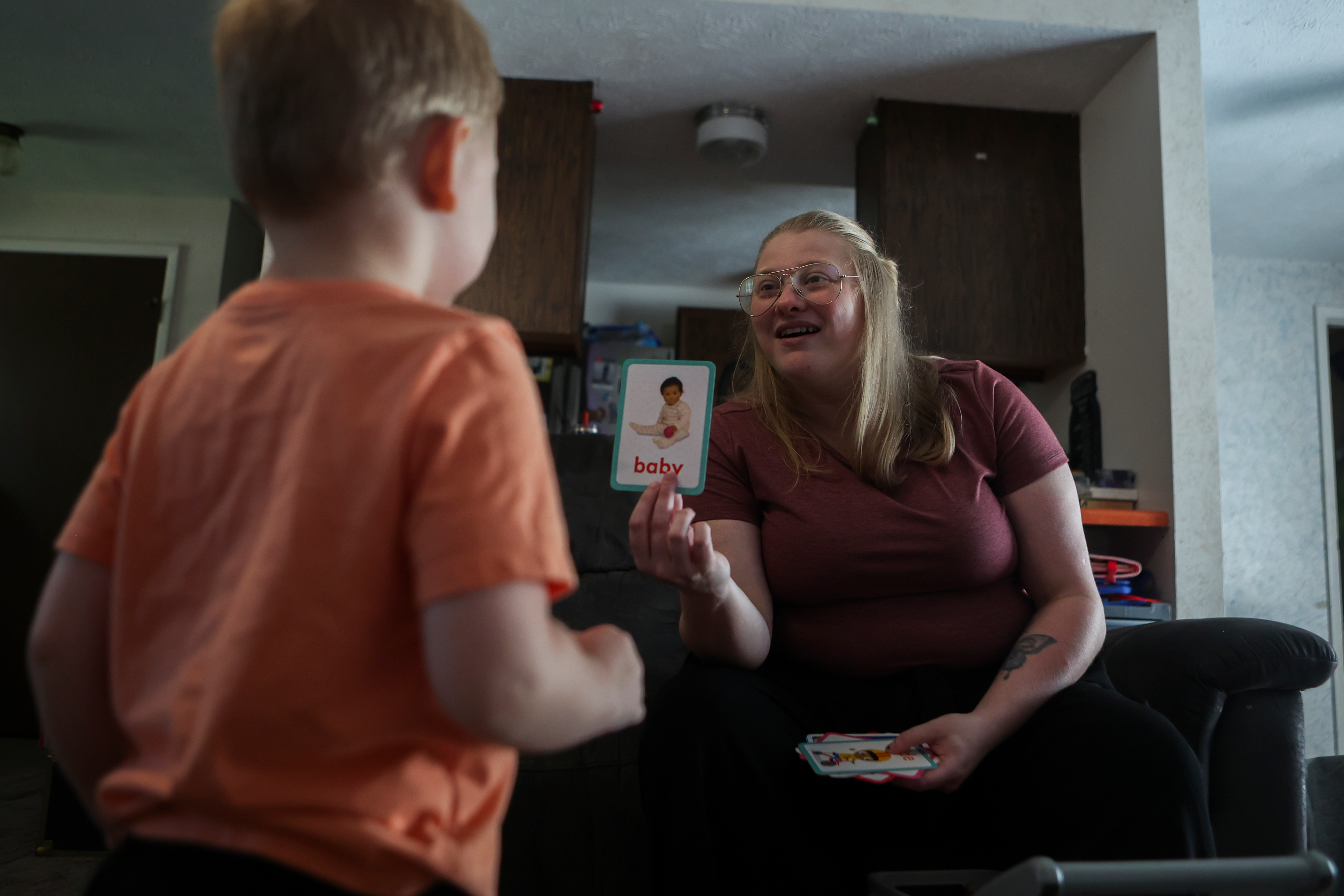
For Meygan Maloney’s family in rural Indiana, waiting for childcare assistance has meant month after month of falling short financially. Maloney was working as a caregiver for disabled adults before she gave birth to her second child in 2023. Around that same time, her household stepped up to take emergency custody of a close relative’s newborn daughter, doubling down on their parental responsibilities.
The next three years were marked by deepening financial struggles for the household. Maloney received only $300 a month to care for her foster daughter, and both of her toddlers were placed on an extensive waitlist when she applied for state childcare vouchers heading into 2025.
Although the baby girl eventually returned to her biological family in the fall, Maloney and her husband remain significantly behind on their bills. They were recently forced to refinance their home to stay afloat, and her husband is currently working seven days a week as a tire technician and delivery driver. A local childcare provider eventually offered her a steep discount, enabling her to leave her young son four mornings a week so she can clean at a local hospital.
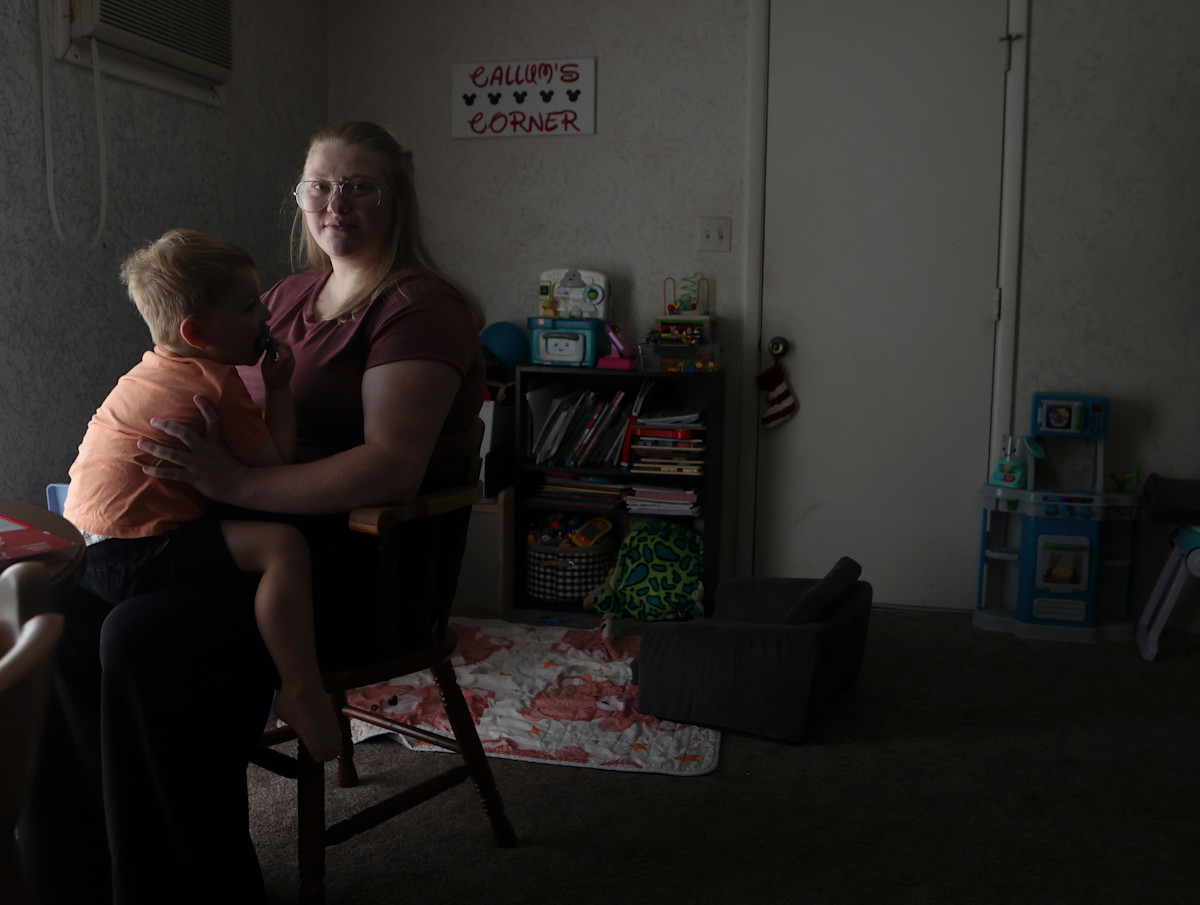
"I felt useless as a stay-at-home mom. I felt like I wasn’t contributing to our household," Maloney said, her voice cracking with emotion. "We’re trying to get out. But for us to get out, we need the assistance."
Foster Parents Left to Pay for Childcare in Indiana
Indiana officially instituted its assistance waitlist in December 2024, arriving just a few months after federal pandemic aid ran out and it became starkly apparent that the state would struggle to financially support the families already enrolled in the program. Until May of this year, the state put virtually every newly applying family on the waitlist, a policy that sweeping net unexpectedly caught foster parents. By the spring of 2026, nearly 37,000 children were waiting for assistance across the state.
Maloney and other foster families expressed feeling deeply misled by the state, which had historically covered the cost of childcare for foster children. Malinda Cox, an Indianapolis mother who took in a newborn last year, explained that she was forced to dip deep into her family’s personal savings to pay for the infant boy’s childcare out of pocket so she could return to her job. At one particularly dark point, she seriously considered giving up custody of the boy because her family simply could not sustain his monthly childcare bill.
Compounding the tragedy, the boy’s biological mother was successfully completing all the rigorous requirements she had to satisfy to take her son home. She had taken mandated parenting classes and secured stable employment. But because she could not afford day care independently, and because the boy could not secure state childcare assistance, the infant had to remain in Cox’s foster care rather than reuniting with his mother.
"We started to feel, like, guilty. He should be home with his mom, but because of this massive system upset, he’s not," Cox said.
In April, Indiana Gov. Mike Braun, a Republican, announced that the state would allocate $200 million in surplus funds directly to the state’s beleaguered childcare assistance program. So far, that infusion has allowed the state to move roughly 8,000 children off the waitlist, with plans to provide assistance to an additional 6,000 children. State officials initially cited the combined total of children affected, though officials note the ongoing process involves both newly removed and projected transitions.
Even before the recent surge in waitlists, federal funding for childcare assistance has historically fallen far short of providing for every needy family, traditionally reaching only a fraction of those who are technically eligible. Childcare experts point out that visible waitlists represent merely the tip of the iceberg, as many eligible families who desperately need help do not even know about the program or choose not to apply, intimidated by widespread reports of insurmountable wait times.
The systemic origins of this funding shortfall are deeply cultural, according to Ruth Friedman, who headed the Office of Child Care under Democratic President Joe Biden. For decades, American public policy treated childcare as an isolated private responsibility of the individual family, she noted. The system is fundamentally broken, Friedman argued, and if the government does not intervene to stabilize and subsidize the infrastructure, it will simply remain unaffordable for the vast majority of working-class families.

Deep political divisions persist regarding whether the federal government should provide financial assistance, and if so, to what extent. Earlier this year, 40 congressional Republicans signed a letter calling for "robust" funding of the primary federal program that underwrites childcare assistance. However, the program ultimately received flat funding comparable to the previous year. President Donald Trump stated during his campaign that he could make childcare more affordable by utilizing tariff revenue, but during an appearance this spring before a White House audience, he asserted that paying for day care should ultimately be left up to individual states.
"We’re fighting wars. We can’t take care of daycare. You got to let a state take care of daycare, and they should pay for it, too," Trump told attendees gathered for an Easter luncheon.
The Trump administration has largely focused its oversight efforts on allegations of fraud within social service programs, at one point halting federal funding to five Democratic-led states over compliance concerns. Following a subsequent legal challenge, a federal judge ordered the administration to immediately restart the funding stream.
Moms Bring Babies to College or Work
Without reliable or affordable childcare options, desperate parents across the country have resorted to bringing their infants and young children directly with them to their workplaces or college classrooms.
In Minnesota, Deaira Gresham’s 1-year-old daughter, Seaira, has been languishing on the waitlist for childcare assistance since birth, making her one of approximately 9,000 children in the state awaiting state aid as of this spring. Gresham, who works as an in-home health aide and maintains a full course load at a chiropractic school, relied heavily on her own mother for sporadic help. But frequently, she was forced to take infant Seaira directly with her to class and into the private homes of her healthcare clients. The constant strain took a severe toll, causing Gresham to fail several classes as she struggled to balance rigorous academic requirements with round-the-clock infant care.
Her fortunes shifted slightly this fall when she successfully secured a specialized childcare grant designated for parenting students, finally allowing her to place Seaira in full-time care.
"Parents are in desperate need," Gresham said. "We need that break. We need to be able to go to school, go to work and know that our kids are in good hands."
The urgency extends beyond the immediate employment and educational needs of parents. Decades of educational research have consistently demonstrated that high-quality early childhood education can profoundly boost a child’s social-emotional development and long-term academic trajectory.
Carmen Perez, who resides north of San Francisco, has applied for childcare assistance for all four of her children. Her eldest son never received a subsidy before aging out of the program entirely, and he subsequently struggled academically in ways that his younger sisters, who were fortunate enough to attend subsidized preschool, did not.
Now, her two-year-old son is trapped on a waitlist, and she lives with the constant fear that he will face the exact same systemic disadvantages as his older brother. "It makes me sick," Perez said.
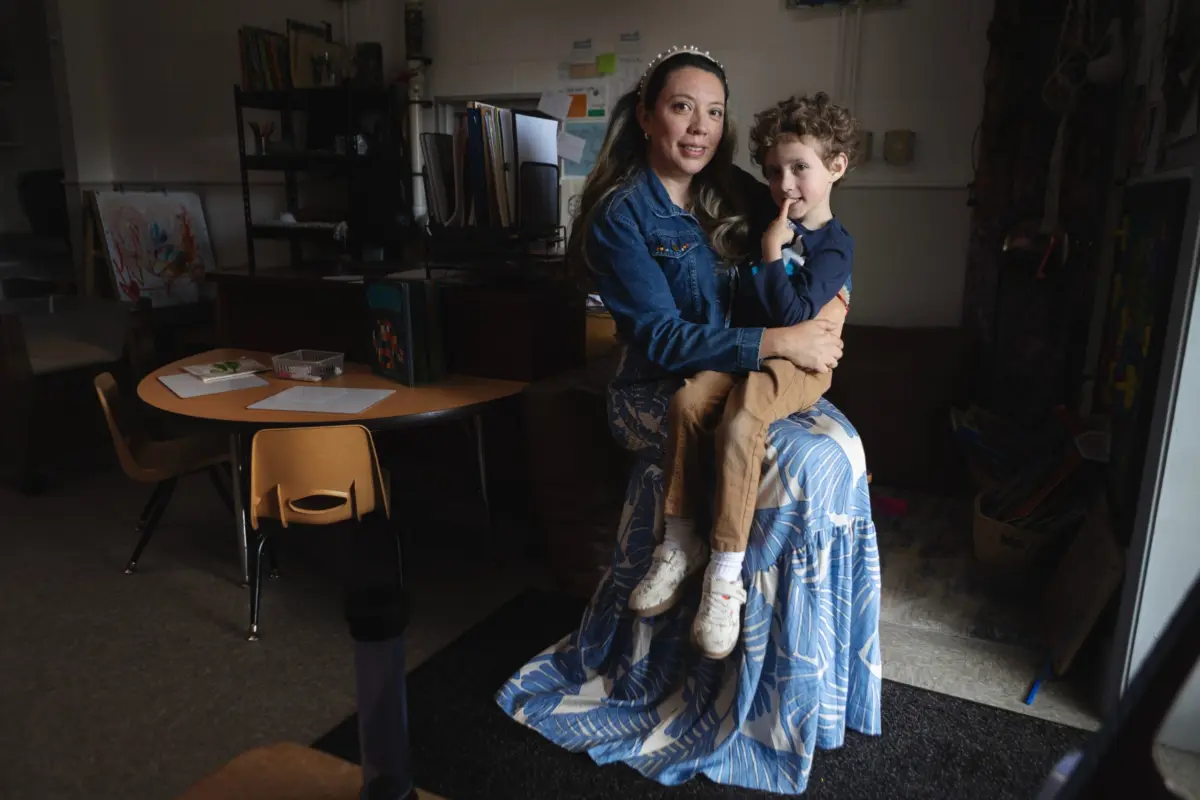
On a rainy May afternoon in Indianapolis, Malinda Cox bundled up her foster son and prepared to deliver him to a social worker. She methodically packed her own car with the boy’s personal belongings—his clothes, diapers, and a small changing table. The boy’s biological mother still had not received official notification of childcare assistance, but Cox had successfully negotiated an independent arrangement with a local day care provider to offer a massive price discount. When even that reduced rate remained out of the biological mother’s financial reach, Cox agreed to pay half out of her own pocket.
She arrived at the boy’s new home to watch him happily reunite with his mother. She felt a complicated mix of personal grief over parting with a child she had grown to love and elation over witnessing his radiant delight upon returning to his family.
Three weeks later, the mother received the long-awaited notice: Her son had finally been approved for a state childcare voucher.