
When London City Lionesses secured a statement victory over Manchester United on the opening night of the 2025-26 season, it felt to many observers as though a symbolic threshold had been crossed in the English women’s game. The result itself was notable, but the true talking point had emerged roughly an hour before kick-off at Hayes Lane in Bromley.
When the official team sheets dropped, they revealed a starting line-up entirely devoid of English players. It was the first time in the history of the Women’s Super League (WSL) that a club had named an all-foreign starting XI on the opening day of a campaign.
Remarkably, the phenomenon repeated itself just two days later. When Tottenham Hotspur triumphed over West Ham United, Scotland striker Kirsty Hanson stood alone as the solitary British player named in Spurs’ starting line-up.
These twin occurrences underscore a broader, accelerating trend across the English top-flight: the unprecedented ability of WSL clubs to scout, recruit, and secure top-tier talent from every corner of the globe. Backed by surging commercial revenues and growing mainstream audiences, English clubs have transformed the WSL into what many pundits and players now regard as the finest and most competitive domestic women’s league in world football.
Yet, as the prestigious Women’s Champions League returns to center stage this week—with English heavyweights preparing for continental battle—a complex and increasingly urgent debate is taking shape. While the financial windfall and global drawing power of the WSL are undeniable, administrators, managers, and analysts are wrestling with a difficult question: Is what is currently good for the health and prestige of the WSL genuinely beneficial for homegrown players, and by extension, the long-term prospects of the home nations?
Or, as Tom Garry of The Guardian has starkly warned, does this influx of international stardust represent an alarming roadblock for the next generation of domestic talent?
The Changing Make-up of the WSL
To understand how rapidly the landscape of English women’s football has shifted, one only has to look back a decade. When Manchester City last claimed the WSL title in their previous era of dominance, they did so proudly fielding an entirely British starting eleven.
That footballing ecosystem has since been unrecognizably altered. A defining catalyst arrived in 2018 when the WSL officially transitioned into a fully professional competition. The subsequent, meteoric rise of the Lionesses—spearheaded by landmark tournament victories and historic runs—unlocked a massive new audience, catapulting broadcasting rights, sponsorship deals, and club revenues to unprecedented heights.
With deeper pockets came a dramatic expansion of scouting networks. WSL clubs are no longer fishing exclusively in domestic ponds; instead, they routinely out-muscle continental rivals in the transfer market, pulling elite talent from powerhouse leagues in Germany, Scandinavia, and beyond. In a striking statement of intent during the summer transfer window, two-time Ballon d’Or winner Alexia Putellas left the traditional comforts of Barcelona to join ambitious, big-spending London City Lionesses.

At the same time, a heavy influx of stars from Japan and Australia highlights the league’s global magnetism. For the world’s best players, England has become the definitive destination.
"Our league has grown significantly and attracted world-class athletes from all over the world," reflects Birmingham City manager Amy Merricks. "Unfortunately, that blocks some of the pathways for the youngsters coming through. We need [this] talent in our league because our league is growing, but at the same time, we have got to try and address this issue."
Statistical tracking reflects the reality behind Merricks’ concerns. When analyzing the proportion of homegrown players—encompassing English, Scottish, Welsh, and Northern Irish athletes—who manage to start 11 or more matches, data shows a steady, multi-season decline that has reduced their presence to under a third of regular starters.
While the opening weeks of the 2026-27 season offered a slight statistical bump, analysts attribute this mostly to the WSL’s expansion from 12 to 14 teams, alongside the higher ratio of domestic players carried by newly promoted sides like Birmingham City, Crystal Palace, and Charlton Athletic.
Crucially, this downward trend is not mirrored across Europe’s other major footballing heartlands. In France’s Premiere Ligue, 61% of players starting half or more of their matches are French. In Germany, 62% of Frauen Bundesliga regulars are German, while Spain’s Liga F boasts a staggering 69% of Spanish starters.
WSL managers, caught between competitive survival and talent development, are frank about where their priorities lie. While coaching staffs universally acknowledge the moral and cultural importance of fostering young domestic talent, the weekly pressure of the dugout dictates a ruthless focus on results.
"The club has a responsibility to raise young players, give our own talents possibilities to be in the squad and compete every week," explains Manchester City boss Andree Jeglertz. "But when it comes to team selection, I always need to pick the team that gives us the best chance of winning the game. If that contains eight young and promising English players or zero, I don’t care. I just want to win the game."
What Is the Potential Impact on the National Team?
This tension points toward a looming crossroads for the sport in England. On one side sits the relentless commercial drive of clubs wanting to remain competitive in a hyper-globalized market; on the other is the pressing need to regenerate an England national team squad that has relied heavily on a trusted core for several major tournaments.
Despite boasting the status of two-time European champions, Sarina Wiegman’s Lionesses have displayed a distinct lack of squad turnover. When England lined up against Spain in June, seven of the starting players had also walked out for the Euro 2022 final against Germany four years prior. Two other starters in that match had spent the 2022 final sitting on the bench.
The consequences of a stagnant talent pool manifested starkly in Majorca, where England were comprehensively outclassed in a 4-0 defeat. The loss cost them automatic qualification for the 2027 Women’s World Cup in Brazil, forcing the Lionesses to navigate a treacherous path of two-legged play-off matches, beginning with a fixture against Greece next month.

The warning signs are similarly visible down the international age groups. During the biennial Women’s Under-20s World Cup in Poland, Lydia Bedford’s young English side suffered a disappointing 3-0 exit in the last 16 against Nigeria. While mitigating factors included the failure of several clubs to release US-based prospects like Erica Meg Parkinson and Laila Harbert, the broader picture remains sobering. For consecutive tournaments in 2022 and 2024, England’s Under-20s failed even to qualify—a stark departure from the class of 2018, when future senior stars like Alessia Russo, Lauren Hemp, and Georgia Stanway powered the nation to a third-place finish on the global stage.
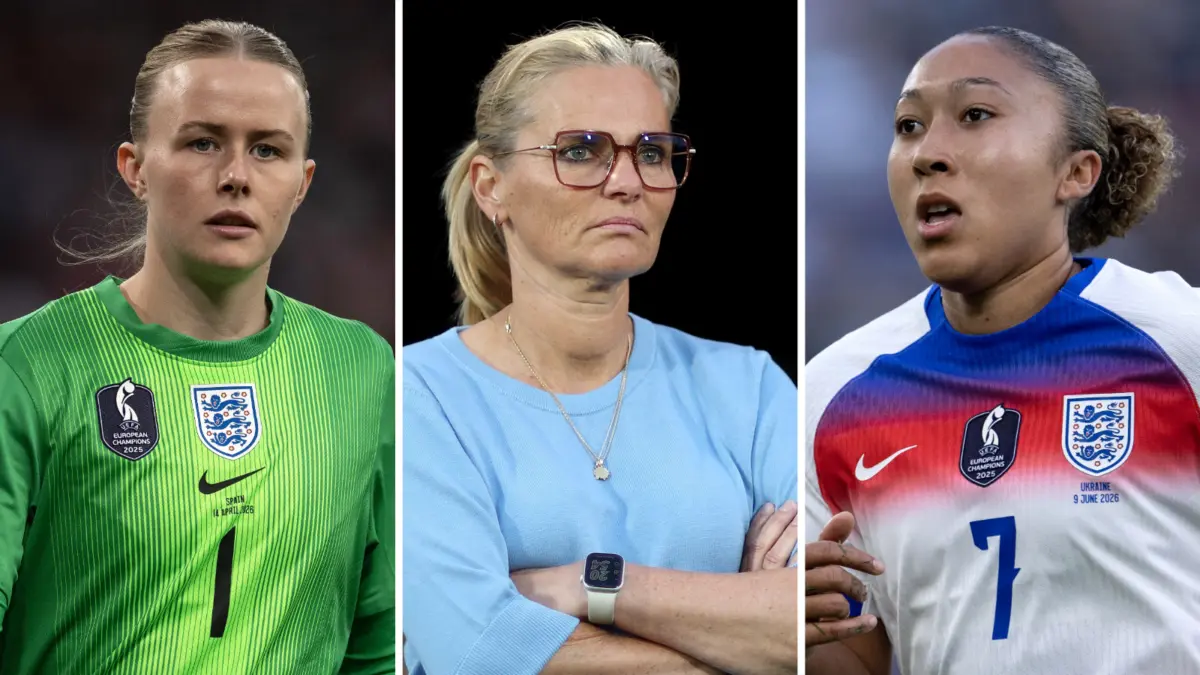
Since taking charge in September 2021, Wiegman has handed senior debuts to 21 players. Yet, of that significant group, only Lauren James, Hannah Hampton, and Lucia Kendall have successfully entrenched themselves as undisputed starters at club and international level. When England step onto the pitch in Crete for their crucial qualifier, the starting line-up is widely expected to feature the familiar faces of the past half-decade.
To safeguard against the stagnation of youth development, Football Association regulations currently mandate that WSL clubs must include a minimum of eight homegrown players in their official squad lists, with stricter sliding-scale quotas applied in the lower tiers.
However, many figures within the game believe these measures no longer go far enough. Former England striker Ellen White argued on the Women’s Football Weekly podcast that the framework requires modernization. "We should be updating that quota of eight players, tweaking it to best help and complement our international structure, our homegrown talent," she said.
That sentiment is echoed by commentators like Tom Garry. "I would love to see them go much further—something mandated, a minimum on the pitch at any one time," Garry told the podcast. "London City’s line-up was alarming. It’s great for the product over here, but will we see pain in 15 years’ time if England are struggling to go deep in major tournaments because we’re not developing players?"
In response to these systemic concerns, the FA approved a controversial restructuring plan last month, clearing the way for select WSL academy sides to enter the National League system starting in the 2027-28 season. Governing body officials argue the move will strengthen the domestic women’s football pyramid, elevate competitive standards, and bridge the developmental chasm currently facing young academy graduates starved of meaningful senior minutes.
Chelsea have already confirmed their intention to enter an academy team into the third tier, while Manchester Institute figures, including City women’s managing director Charlotte O’Neill, have previously expressed a strong desire to follow suit.
As the WSL continues its meteoric ascent as a global entertainment product, English football finds itself navigating a delicate tightrope—balancing the undeniable brilliance of an internationalized league against the vital, fragile duty of nurturing the future of the home nations.