
By PYMNTS | September 20, 2026
U.S. financial regulators have taken a significant step toward integrating emerging financial technologies into the traditional banking system by issuing conditional approvals for three new national trust banks. The decisions reflect a broader wave of transformation and renewed interest in federal banking charters from companies operating at the intersection of finance, blockchain, and artificial intelligence.
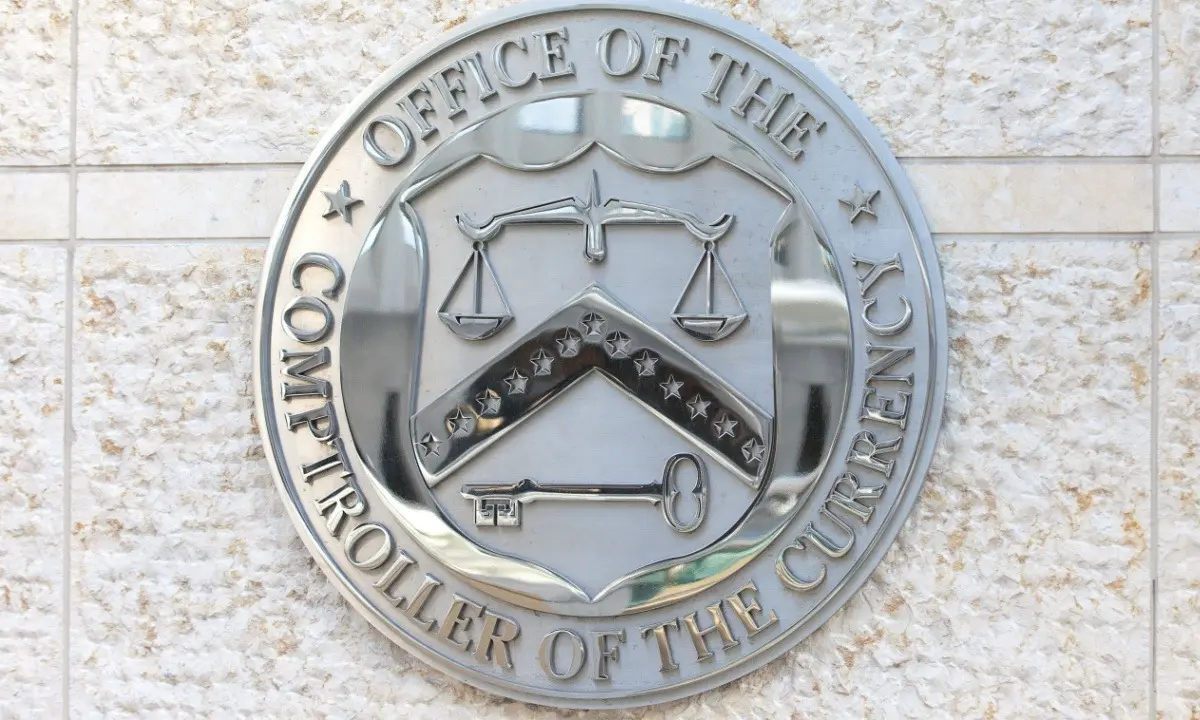
The Office of the Comptroller of the Currency (OCC) granted those crucial conditional approvals, greenlighting the establishment of Agora National Trust Bank and Catena Trust Bank, while simultaneously permitting the structural conversion of Bastion Platforms Trust Company into a national bank. This regulatory milestone marks a pivotal moment for these firms, allowing them to operate under a unified federal framework rather than relying on a patchwork of state-level licenses or third-party banking partners.
The shift toward federal oversight is viewed by industry leaders as an absolute necessity for scaling modern financial products. Speaking on the implications of the regulatory decision, Bastion CEO Nassim Eddequiouaq highlighted the structural limitations that traditional financial institutions face when partnering with unregulated technology providers.
"If you are a bank, you cannot rely on simple fintech unless they are federally regulated," Eddequiouaq told The Wall Street Journal in an interview. He added that achieving national bank status changes the company’s market positioning fundamentally: "We can now be that regulated partner for all of the largest financial institutions in and outside of the U.S., who want to launch products here."
Bastion specializes in issuing white-label stablecoins for various corporate clients while maintaining rigorous oversight over the custody of reserve holdings and customer digital wallets. As stablecoins continue to gain meaningful traction within the mainstream financial sector, industry advocates increasingly champion them as a superior alternative to legacy payment methods. Proponents point out that digital assets enable significantly faster transaction settlement times while imposing substantially lower fees compared to traditional wire transfers and cross-border payment rails.
Addressing the future expectations of corporate clients and consumers alike, Eddequiouaq emphasized the transformative speed of modern digital finance. "There’s going to be this expectation that banks can actually transact 24/7 for a fraction of a cent," he noted. Securing a national bank charter provides the institutional credibility and legal certainty required to deliver continuous, high-speed financial services at a massive global scale.
While Bastion focuses heavily on white-label stablecoin infrastructure and institutional custody, Catena is carving out a unique niche by developing financial architecture specifically tailored for artificial intelligence agents. According to the company’s official documentation, Catena’s platform is designed to handle autonomous digital operations, including specialized accounts, automated payments, sophisticated treasury functions, and granular controls over what AI agents are permitted to do with financial capital.
The company emphasizes that its technology is not merely an adaptation of outdated banking software. "We’re not bolting AI requirements onto a legacy platform," the company states on its website, outlining its technological philosophy. "We’re building from the ground up: deterministic policy enforcement, immutable audit trails, and verifiable agent identity." By securing a national trust bank charter, Catena positions itself to provide the secure, compliant banking foundation that autonomous financial agents require to operate safely within the formal economy.
Agora represents another major player in the modern digital asset landscape. The company formally applied for its national bank charter earlier in the year, signaling its intent to embed digital dollars deeper into global commerce. In addition to issuing its AUSD stablecoin, Agora has articulated plans to build a comprehensive financial operating system designed specifically for global businesses. This infrastructure encompasses robust settlement systems, advanced treasury management capabilities, seamless fiat currency connectivity, and specialized software tools that help corporate entities interact effortlessly with digital dollars.
The strategic importance of securing federal oversight was underscored by Agora CEO and Co-Founder Nick van Eck when the company first sought its charter. Writing in a company blog post, van Eck described the federal license as the essential legal foundation required for sustainable growth. "The charter is the regulatory layer that makes all of that possible at scale," van Eck wrote. "Operating without a U.S. federal charter means renting the rails in the world’s most important financial market."
The recent approvals granted to Agora, Catena, and Bastion underscore a broader, nationwide surge in interest regarding federal banking charters. Data released by the OCC illustrates an unprecedented wave of new market entrants seeking regulatory integration. In August, the OCC reported that it had received 40 de novo bank applications during the preceding 18-month period, a figure that includes applications for national trust banks.
To put this recent regulatory rush into perspective, the volume of applications submitted over those 18 months nearly matches historical metrics from prior decades. By comparison, the federal regulator received a total of 48 applications during the entire 14-year span running from 2011 through 2024. This dramatic acceleration highlights a fundamental shift in how technology companies view regulatory compliance and institutional legitimacy.
Industry analysts note that this unprecedented surge reflects a strategic evolution across the financial technology sector. Rather than viewing federal regulation as an administrative hurdle, modern fintech firms increasingly recognize that obtaining a direct charter is essential for establishing trust with institutional clients, expanding operations nationwide, and integrating smoothly with legacy banking networks.
The services associated with these newly submitted applications provide a clear window into the future of the banking industry. They reveal precisely which segments of financial services new market entrants are eager to control, ranging from next-generation stablecoin issuance and real-time settlement rails to automated treasury management for artificial intelligence agents. As these conditional approvals move toward final operational status, the landscape of American banking continues to evolve, bridging the gap between traditional financial institutions and the rapidly expanding digital economy.