
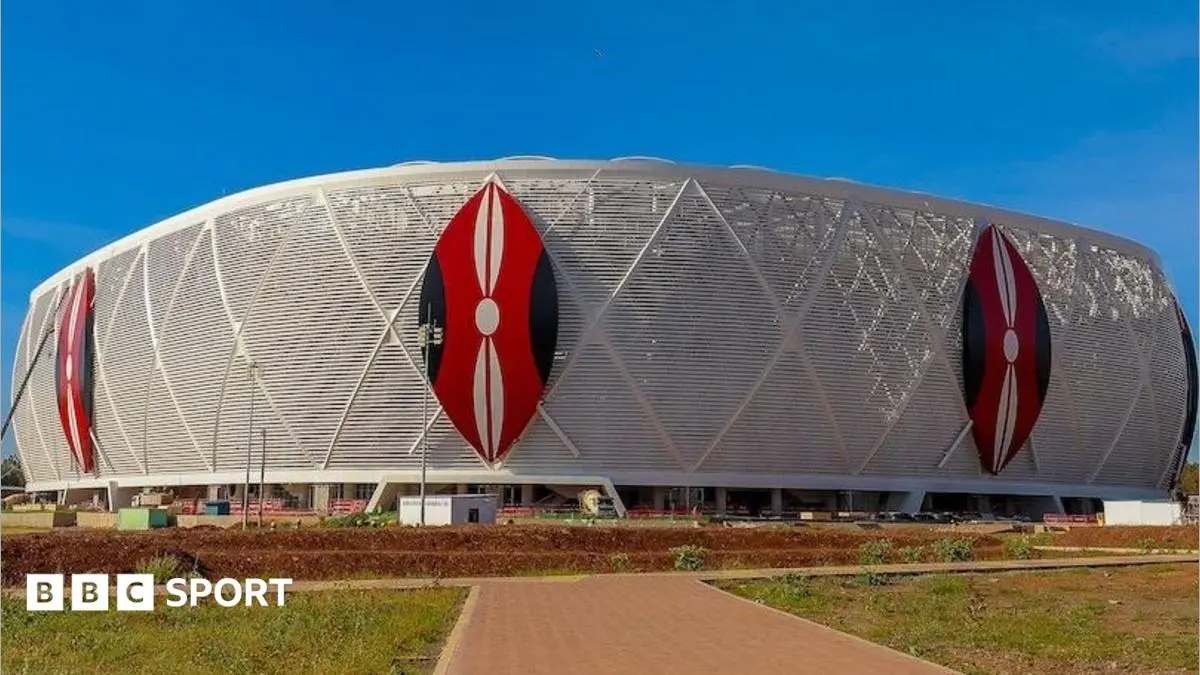
African football boss Patrice Motsepe has issued a firm call for a "heightened sense of urgency" from the co-hosts of the upcoming Africa Cup of Nations, urging Kenya, Tanzania, and Uganda to accelerate their infrastructure developments with little room remaining for further delays.
The prestigious tournament is historic for the region, set to return to East Africa for the first time in an astonishing 51 years. The grand sporting showcase is scheduled to kick off with its opening match on June 19, culminating in the tournament final on July 17. With the timeline tightening rapidly, stadiums across the host nations are expected to be fully ready for operational testing in around three months’ time. Confederation of African Football (Caf) president Motsepe emphasized that any procrastination at this critical stage could jeopardize the seamless execution of the tournament.
Speaking to BBC Sport Africa after inspecting ongoing preparations on the ground in Kenya, the South African football administrator stressed the absolute necessity of meeting these tight deadlines. "Even though we’ve got nine months, we need to start using those stadiums in January next year to test them and to see what further improvements are required," Motsepe explained, highlighting the pivotal window required for trial events and operational stress-testing.
Reflecting on his tour, Motsepe acknowledged that there had been "very good progress" in various sectors, yet he candidly admitted that certain facilities remained noticeably below the required standard. The expectations from continental football governing bodies are exceptionally rigorous when it comes to staging a world-class tournament of this magnitude. "We’ve got very high standards in terms of our expectations of the infrastructure, the facilities and the stadiums, the hotels, the roads, the football pitches where training takes place," Motsepe added, reinforcing the overarching vision for the competition. "We require those facilities to be world class."
Despite the acknowledged delays and developmental hurdles in certain areas, the Caf president firmly dismissed any speculation regarding a potential schedule change. He insisted that there was not the slightest consideration of a postponement, noting that the deep level of national and regional commitment across the co-hosting nations outweighs the temporary setbacks.
Motsepe’s comprehensive inspection tour for the 2027 Africa Cup of Nations initially commenced in Tanzania before moving northward into Kenya. During his stay in Nairobi, the Caf leader conducted detailed site visits to two major venues: the historic Kasarani Stadium and the newly constructed, state-of-the-art 60,000-capacity Talanta Stadium.
Sources within BBC Sport Africa indicate that one of the primary areas causing concern during the Kenyan leg of the tour is the Kasarani venue alongside its corresponding training facilities. These concerns carry even greater weight given that Kasarani Stadium is also slated to host the 2029 World Athletics Championships, a major global honor that Nairobi secured ahead of strong bids from London and Rome.
When Caf officials conducted their previous round of formal inspections back in mid-February, local organizers were explicitly instructed that the stadiums and their associated training pitches should be approximately 80 percent ready by the month of August. However, progress at Kasarani has experienced limited momentum over the past seven months, leaving multiple critical areas still demanding urgent attention and intensive labor.
Among the most pressing technical challenges is the playing surface itself, which is yet to be fully laid. In addition to the turf, significant structural and technical work remains incomplete, including the intricate cabling required for international broadcast and television operations, the installation and calibration of advanced floodlights, and the finalization of the stadiums’ exclusive sky boxes.
Beyond structural and technical concerns, Motsepe also drew attention to the complex security and logistical demands associated with hosting hundreds of high-ranking VIPs and visiting heads of state. These unique requirements mean that several stadium designs will need to be reconfigured to accommodate heightened diplomatic protocols. "Security issues in relation to where the special guests, particularly the heads of state, will be seated requires a revision of the original plans," the 64-year-old explained, highlighting the multifaceted nature of preparing for a continental showpiece.
In response to the growing pressure from the governing body, Kenya’s cabinet secretary for sports, Salim Mvurya, stepped forward to offer strong assurances that all preparations would be successfully completed well ahead of schedule. "I assure Caf and Kenyans we will accelerate the preparations for Afcon 2027," Mvurya stated firmly. "We will conclude everything by December to be sure we can have test matches in the various facilities."
Despite historical precedents involving tournament delays and ongoing anxieties regarding regional readiness across East Africa, Motsepe has made it abundantly clear that the foundational timetable for the 2027 Africa Cup of Nations will not be reconsidered under any circumstances. "There’s no plan B, there’s no plan C," he asserted, signaling unwavering confidence in the collective capability of the host nations.
For Kenya specifically, ensuring that the tournament preparations succeed carries significance that extends far beyond the realm of football alone, as the continental competition has been integrated into a much broader national economic and sporting master plan. "One of the reasons why Kenya won the 2029 World Athletics Championship bid is because we are hosting Afcon. Therefore this is a legacy," Mvurya noted.
Elaborating on the broader socioeconomic impact, the sports cabinet secretary emphasized the transformative power of major sporting events. "Sport is not just entertainment, it is livelihood, it is economic transformation," Mvurya said. "Therefore we are aware the opportunity to host Afcon will be key for our economic inspiration. Our tourism will be a big beneficiary. As government, we are confident we will host a successful Afcon."
As the clock ticks down toward the tournament, the next three months will undeniably prove to be the most critical phase in turning these ambitious governmental promises into tangible, match-ready reality.