
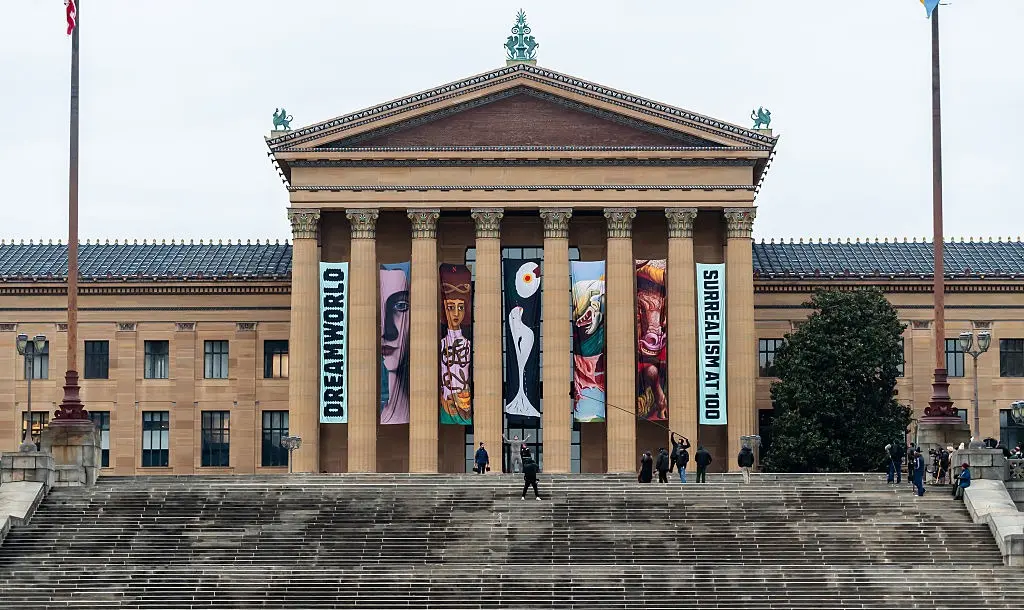
A former high-ranking executive at the Philadelphia Museum of Art (PMA) has been sentenced to five years of probation after admitting to the misuse of company funds. Latasha Harling, who served as the museum’s inaugural chief people and diversity officer, entered a guilty plea on Friday to the charge of receiving stolen property, a resolution that effectively averted a trial that had been scheduled to begin that same day.
The sentencing, handed down by Common Pleas Court Judge Leon King II, marks the conclusion of a legal saga that began when museum officials discovered significant discrepancies in corporate credit card expenditures. Under the terms of the sentence, Harling, 44, is required to pay $30,000 in restitution to the institution. The court has mandated that she make monthly installments of at least $500 toward that total, with payments scheduled to commence in January. Judge King noted that the probationary period could be terminated early should Harling succeed in paying the full restitution amount before the five-year term expires.
The Rise and Fall of a Strategic Hire
Harling joined the Philadelphia Museum of Art in November 2023, stepping into a newly created role that was designed to be central to the institution’s internal operations. As the museum’s first chief people and diversity officer (CPO), she was tasked with overseeing the critical departments of human resources and institutional diversity, equity, and inclusion initiatives. Such a role carries significant weight within a major cultural institution, requiring a high degree of trust and stewardship over both personnel management and internal fiscal responsibility.
In her capacity as CPO, Harling was granted access to corporate credit cards to facilitate the expenses associated with her administrative and operational duties. However, within a little more than a year of her tenure, the professional relationship between the executive and the museum soured amid allegations of financial misconduct.
According to an affidavit of probable cause filed during the investigation, the museum’s administration began to harbor suspicions regarding Harling’s professional conduct in January 2025. This concern was triggered when officials were alerted to a series of transactions appearing on her corporate credit card statements that did not align with the museum’s operational needs. These suspicious charges prompted an immediate internal review.
An Audit Reveals Systematic Misuse
Following the initial red flags, the museum’s chief financial officer initiated a formal audit of the expenses linked to Harling’s corporate account. The findings of this audit were significant. Investigators determined that since her hiring in November 2023, Harling had allegedly charged a total of $58,885 in personal expenses to the museum-issued credit card. The nature of these charges, which the affidavit described as clearly personal in nature, left little room for ambiguity regarding the misuse of institutional funds.
The revelation of such a substantial sum placed the museum in a difficult position, forcing a confrontation with an executive hired to uphold the organization’s values and internal integrity. In the immediate aftermath of the audit, the museum attempted to handle the matter internally. The affidavit indicates that Harling was offered a pathway to rectify the situation: she was presented with the opportunity to repay $32,565 to the museum.
Shortly after this discovery and the subsequent request for repayment, Harling resigned from her position. However, her departure did not result in the immediate resolution of the financial deficit. The outstanding balance remained unresolved, leading the museum to take further steps to recover the misappropriated funds.
Escalation to Legal Action
In February 2025, the museum’s efforts to recoup the money appeared to gain traction when Harling signed a formal promissory note. In this legal document, she committed to repaying $19,380 to the institution over a period of three months. This agreement represented a significant portion of the total discrepancy identified by the museum’s finance department.
However, the repayment plan failed to materialize as promised. By April, the museum had not received any payments under the terms of the promissory note. Faced with a breach of the agreement and the failure to recover the stolen assets through administrative and civil channels, the museum escalated the matter by contacting law enforcement. The resulting investigation led to the criminal charges that were resolved in court this past Friday.
Institutional Response and Moving Forward
The Philadelphia Museum of Art, a cornerstone of the city’s cultural landscape and a major tourist destination, has maintained a relatively low profile regarding the internal details of the case, focusing instead on the restoration of its operational focus. In a statement released following the sentencing, a spokesperson for the museum expressed a sense of closure, noting that the institution’s leadership is “grateful that the case is resolved.”
The spokesperson further emphasized the museum’s desire to move past the distraction caused by the incident. "We look forward to returning our focus to the exhibitions, programs, and experiences we provide for our community," the statement read.
For the museum, the incident serves as a stark reminder of the complexities involved in overseeing the finances of large, public-facing non-profit institutions. The role of a chief people and diversity officer is fundamentally centered on trust, culture, and the fair treatment of staff—values that the museum maintains are central to its mission. The breach of that trust by a member of the senior executive team created a significant internal challenge for an organization that relies heavily on its reputation and its commitment to the public good.
As the court-ordered restitution payments begin in the coming year, the case of the former CPO remains a cautionary tale for non-profit governance. The $30,000 in restitution ordered by Judge King will be paid back to the museum in monthly installments, marking a long-term, court-monitored effort to restore the funds that were taken. For now, the museum continues its efforts to fulfill its mission, leaving the legal proceedings behind as it seeks to stabilize its administrative operations following the vacancy and subsequent resignation of its inaugural chief people and diversity officer.
The resolution of this case on Friday brings an end to the active criminal litigation, allowing the institution to move forward without the shadow of an active, unresolved fraud case hanging over its internal personnel and financial departments. The focus for the museum’s leadership will likely remain on maintaining the robust internal controls necessary to ensure that its financial resources continue to be directed toward the art, education, and public programs that define its existence in Philadelphia.