
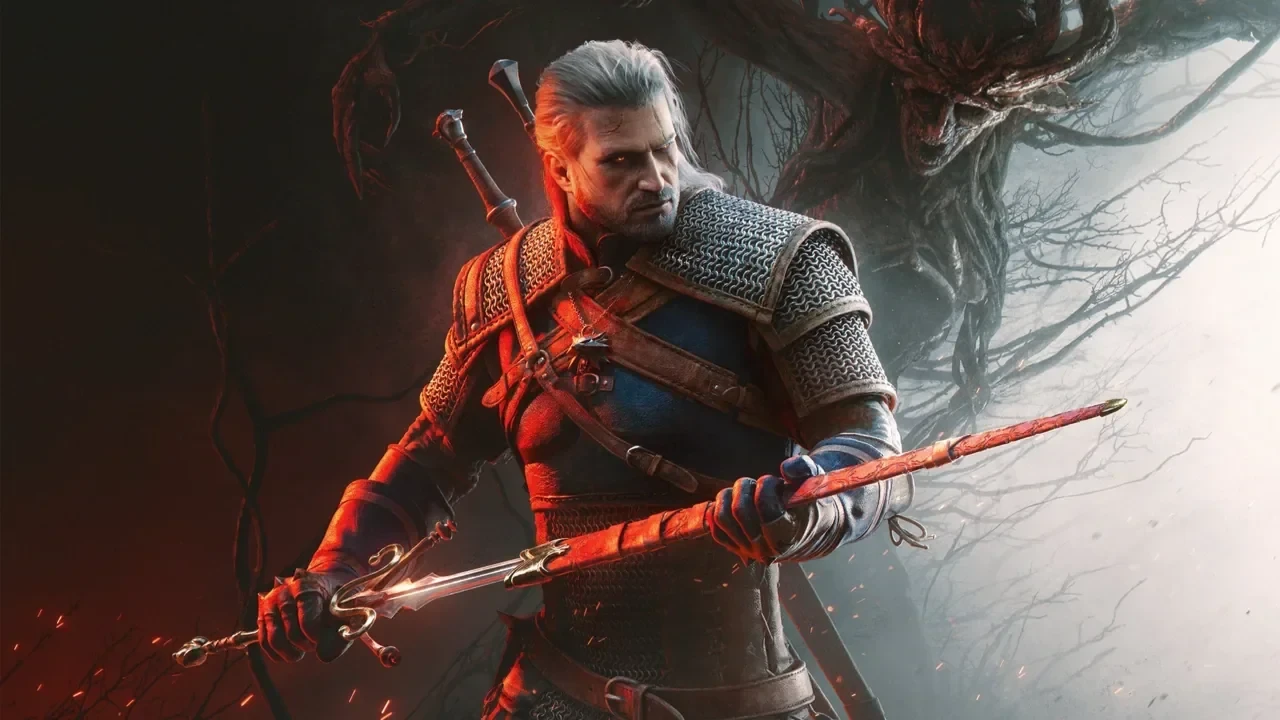
In a move that highlights the evolving intersection of technology, creative integrity, and accessibility in the gaming industry, CD Projekt Red (CDPR) has employed generative AI to assist in the vocal performance of Jacek Rozenek, the original Polish voice actor for Geralt of Rivia. The decision, implemented for The Witcher 3: Songs of the Past expansion, marks a significant "special case" where the studio utilized synthetic voice technology not to replace an actor, but to preserve the continuity of a character’s identity after the performer suffered a life-altering medical event.
Jacek Rozenek has long been the definitive voice of Geralt in the Polish localization of the Witcher series. However, his journey took a difficult turn in 2019 when he suffered a stroke that left him with significant speech impairments. The recovery process was grueling, requiring the actor to undergo six to seven hours of intensive voice training daily to regain his ability to speak. While Rozenek showed remarkable resilience, his return to the booth for the 2022 next-gen update of The Witcher 3 proved to be an exhausting endeavor, and it became clear that his vocal register had undergone permanent, natural changes following his health crisis.
When CDPR began production on the Songs of the Past expansion, they were faced with a dilemma. They wanted Rozenek to reprise his iconic role, but they were acutely aware that his current voice—now lower and significantly gruffer than it was twelve years ago—would create a jarring inconsistency for players. The issue was not that the voice was "wrong" for the character, but that the juxtaposition of his original 2014 recordings against his current performance could break the immersive quality of the game.
Mikołaj Szwed, CDPR’s localisation director, explained the necessity of the approach in a recent interview with Game File. "For future projects, when we consider Geralt is becoming older and has a deeper voice, this is not a problem for us at all," Szwed stated. "It’s more about this specific situation here, where we have both the voice from 12 years ago and from now next to each other, which could kind of take people out of the experience."
To bridge this gap, CDPR collaborated with the Ukrainian AI company Respeecher. The studio’s goal was to synthesize a performance that retained Rozenek’s emotional nuance while aligning the sonic quality with his younger portrayal of the character. Crucially, the process was handled with the full consent and participation of the actor, who expressed his complete trust in the developers. "The point is that this voice should be as close as possible to my voice from 12 years ago," Rozenek remarked, emphasizing his collaborative relationship with the team.
This is not the first time CD Projekt Red has turned to Respeecher to navigate sensitive voice-acting challenges. The studio previously utilized the company’s technology to recreate the voice of Miłogost ‘Miłek’ Reczek, who played Viktor Vektor in Cyberpunk 2077, following his passing in 2021. In that instance, as in the case of Rozenek, the project proceeded only with the explicit consent of the actor’s family, setting a precedent for ethical AI usage within the studio’s internal policies.
The technical execution of the project was a monumental task, as described by Dmytro Vasylets, a synthetic speech artist at Respeecher. To train the model, CDPR provided the company with every line Rozenek recorded for the original Witcher 3. "We basically delivered to Respeecher all the lines that Jacek recorded for us for The Witcher 3," Szwed noted. "They created an algorithm of his voice, based on his lines."
However, the transition from raw AI generation to a polished in-game performance was far from seamless. Vasylets highlighted that the "hardest part was Jacek’s emotional range: the half-tones, shouts, groans, anger, fear and laughter. Capturing all of that at the highest audio quality was the real challenge." The team spent dozens of hours fine-tuning the models and manually filtering out the inherent "AI artifacts"—the unnatural glitches or robotic textures that often plague synthetic speech. For the engineers involved, the objective was to ensure that the technology acted as a transparent layer, allowing the audience to hear Rozenek’s performance rather than the algorithm itself.
The use of AI in this context provides a stark contrast to the broader, often contentious, industry debates surrounding the technology. As generative AI becomes more sophisticated, concerns regarding the unauthorized replication of voices, job displacement, and the dilution of human artistry have reached a boiling point. Just last month, the Japan Actors’ Union issued new, stringent guidelines addressing the unauthorized use of generative AI in voice acting, specifically stating that any AI-replicated performance should be legally treated as a new, distinct performance that requires additional compensation and royalty structures.
Simultaneously, industry bodies like UKIE have begun formalizing frameworks to guide studios through the legal and ethical minefield of AI implementation. Their partnership with the law firm Sheridans to offer an "AI Compliance and Accreditation Service" is designed to help studios navigate the balance between innovation and responsible practice.

CD Projekt Red maintains that their approach represents an ethical path forward. Szwed underscored that the studio’s contracts explicitly prohibit the use of an actor’s voice with AI without their prior consent. By treating the Songs of the Past project as a "special case"—a bridge for an artist who has given years of his life to the character—CDPR frames the technology as a tool for inclusion rather than a replacement for human talent.
For the gaming community, the story of Jacek Rozenek serves as a reminder of the human cost behind the digital experiences we consume. While the technology employed is undeniably high-tech, the motivation was rooted in a desire to honor a long-standing creative partnership. As the industry continues to grapple with the ethics of synthetic performance, the Witcher 3 case stands as a notable example of how AI can, under the right circumstances and with the proper ethical guardrails, be used to sustain the legacy of a performer whose voice has become inseparable from the character they brought to life.
The success of this endeavor ultimately rests on the careful synthesis of technical skill and human consent. Whether such implementations will satisfy the growing calls for industry-wide regulation remains to be seen, but for now, the collaboration between CDPR and Rozenek offers a glimpse into a future where technology might serve to extend, rather than erase, the careers of the actors who define our favorite stories.