
In the ever-shifting landscape of the video game industry, few stories are as captivating as the meteoric rise of a title that seems to emerge from the ether, bypassing traditional marketing machines to find a massive, dedicated audience. Dressmaker, the latest project from the South African developer and publisher Free Lives, is the most recent example of this phenomenon. Since its release on September 21, the game has defied conventional wisdom, selling over 482,000 units according to data from Video Game Insights. For a title that arrived without a high-profile marketing campaign, its trajectory has been nothing short of "astronomical."
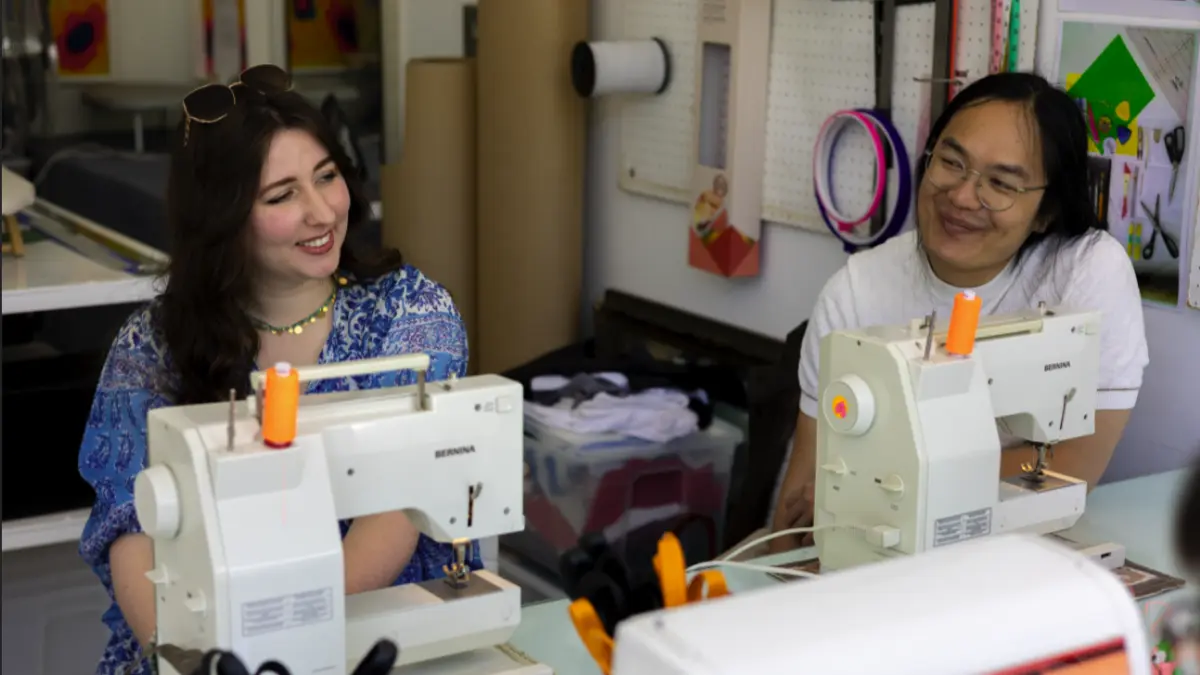
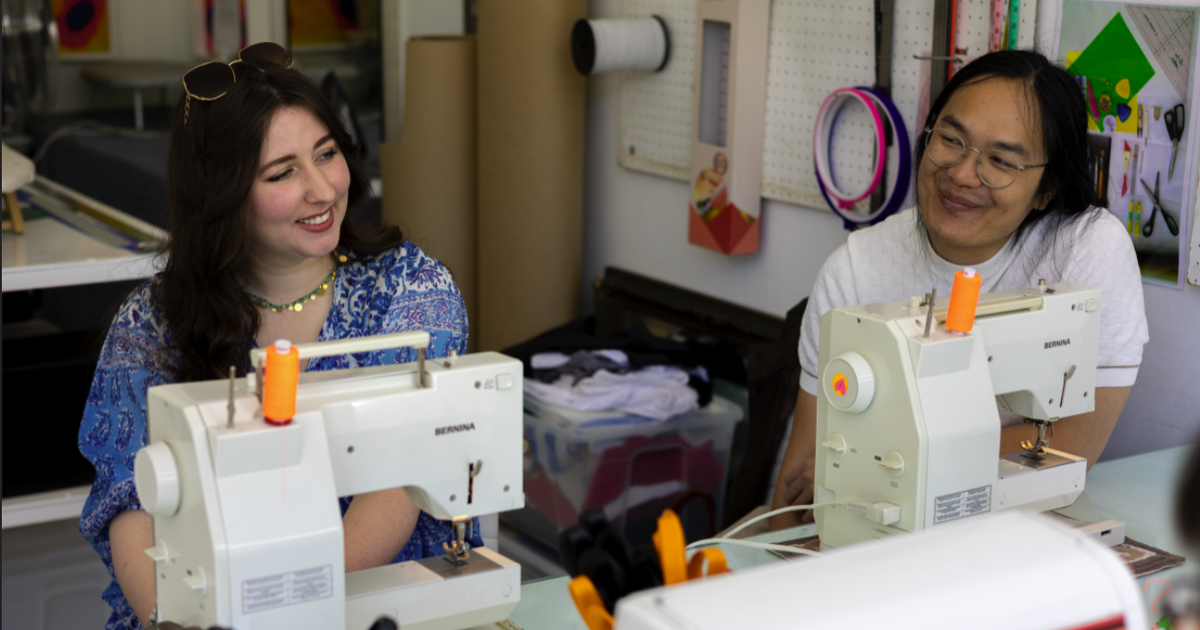
Jonathan Hau-Yoon, a core team member at Free Lives—best known for his work on the critically acclaimed strategy title Terra Nil—admits that even those closest to the project were caught off guard by the scale of its reception. "We definitely thought the game would do well," Hau-Yoon tells GamesIndustry.biz. "But maybe we envisioned it performing in the top three or four games that Free Lives has made before, rather than the astronomical success that it has actually experienced."
An Unconventional Growth Pattern
Perhaps the most compelling aspect of Dressmaker’s success is its defiance of the standard industry lifecycle. Most new releases experience an immediate, sharp spike in interest upon launch, followed by a steady, predictable decline in player engagement. Dressmaker has done the exact opposite. According to Video Game Insights, the game’s maximum daily concurrent user (CCU) count sat at just under 8,000 on its first day. By the end of the first week, that figure had climbed to over 35,000, and by day 14, it had surged to more than 43,000.
What makes this growth even more remarkable is that it occurred with virtually no paid marketing in the Western markets. While Hau-Yoon notes that some content creators in China were compensated for coverage, the majority of the game’s surging player base remains concentrated in North America and Europe.
The engine behind this growth is purely organic, fueled by a community that finds genuine joy in the creative process and is eager to showcase its results. Sabrina Becker, a member of the development team who is also an expert dressmaker in her own right, attributes this to the contagious nature of the game’s core loop. "A lot of it is just that people are having so much fun playing it, and they’re sharing so much of what they’re doing," Becker explains. "In that sharing, that real, joyful enthusiasm seems to be coming through. So many people are seeing that and they say, ‘I also want to play and have fun and make pretty dresses.’ And then they play, and then they also share what they’ve made. It just feels like a little bit of a snowball in the best way possible."
Building a Sticky Experience
The team at Free Lives—comprising three full-time and three part-time developers—began to suspect the game possessed an unusual level of "stickiness" during the playtesting phase. Among nearly 200 initial testers, the median playtime reached 30 hours. In the context of contemporary gaming, where player retention is a constant battle, 30 hours is an exceptionally high figure. Even more telling were the power users, some of whom logged over 400 hours—a duration that far exceeds the actual programmed content within the game.

This extended engagement is not the result of artificial progression loops or "grind-heavy" mechanics, but rather the result of players creating their own ecosystem. On Discord, users have spontaneously organized their own challenges and creative themes. Hau-Yoon highlights one particularly poignant example: the "heirloom dress." In this collaborative ritual, one player creates a garment, exports the file, and passes it to another, who then continues the work. "It feels a little bit like this thing that was passed down generations," Hau-Yoon says, "where you can trace through all of the changes that each person made. That was never built into the game; these are just players finding ways to enjoy it, finding ways to use the creative tools."
Addressing an Untapped Audience
The broader industry implications of Dressmaker’s success point to a glaring oversight in market targeting. For years, the prevailing wisdom in the gaming sector has often marginalized titles that do not fit into traditional action or strategy molds. Yet, as Becker recalls, the potential for Dressmaker was evident long before the game hit the public market.
"I remember so clearly we had a conversation last year in December at a company party," she says. "The founder of the studio was congratulating us, and he mentioned, ‘I’ve talked to so many people’s girlfriends who say that they don’t play games, but they want to play Dressmaker.’ And I was like, ‘That’s our target audience.’"

While the team does not track specific player analytics, the demographic data from their social media channels is telling: 85% of their followers are women. This, they argue, is not a coincidence but a direct result of designing for an underserved demographic. As Becker points out, the absence of women in certain corners of the gaming world is not a result of a lack of interest, but rather a lack of suitable products.
"I think the reason that a lot of women don’t play games is just because there aren’t games that they want to play, not because there’s some sort of inherent gender bias for or against video games," she notes. She points to the gaming landscape of the 1990s and early 2000s, where titles appealing to feminine interests were more common and the gender divide in gaming was less pronounced. "There were so many Barbie games and dress-up games, and all of these things that appealed to more feminine interests. And then somewhere along the line, they just stopped making those for the most part. It feels like such a massively wasted opportunity."
A Personal Genesis
The origins of Dressmaker were rooted not in market research, but in a desire to solve a personal problem. During the COVID-19 pandemic, Hau-Yoon was searching for games that might appeal to Becker’s interests in fashion and costume design. He found that most existing titles fell short; they were either too shallow or failed to treat the subject matter—and the player—with the necessary respect.

"Sabrina is super into clothing and the construction of clothing," Hau-Yoon explains. Their relationship was built in part on these shared interests, from analyzing costumes in films to discussing the nuance of design. When he realized no game existed that captured the meticulous nature of real-world dress construction, he decided to build one specifically for her.
The challenge was bridging the gap between reality and entertainment. "Creating a dress from scratch is a many, many tiered process, and a lot of it is very tedious and repetitive," Hau-Yoon admits. The design philosophy became a balancing act: how to simplify the process for a game while maintaining enough depth to satisfy those who understand the craft. By using real-world activities as a template, the team found it easier to "filter" the necessary elements, focusing on what made the process rewarding rather than what made it work-like.
Looking Toward the Future
Despite its success on PC, the team acknowledges that the platform may not be the most intuitive or accessible for their target audience. Moving forward, the priority is expanding to platforms like the Nintendo Switch and mobile devices. However, the developers are cautious about the transition.

"We’ve always really thought about Dressmaker as being a game that is ideal for mobile and Switch," says Hau-Yoon. "But to make a game for mobile and Switch generally is more expensive than making a game for Steam." The team is currently handling the porting process in-house, ensuring that the touch and controller interactions feel natural for the hardware, and they are refusing to rush the process.
For the existing community, the developers are committed to long-term support. While they remain coy about specific features, they have acknowledged the high volume of requests for a "Hatmaker" spin-off, buoyed by the fact that a staff member has formal training in millinery. In the short term, players can expect free updates, with an online competition mode currently in development.
As the industry observes the success of Dressmaker, it serves as a potent reminder that the gaming market is far broader than the stereotypical "gamer" profile suggests. By widening the net and addressing interests that have been neglected for decades, developers like Free Lives are finding that there is a massive, enthusiastic audience waiting for the right kind of experience. For those looking for a path forward in the indie space, Dressmaker offers a clear, if demanding, lesson: if you build it, and it resonates, the results can be truly transformative.